

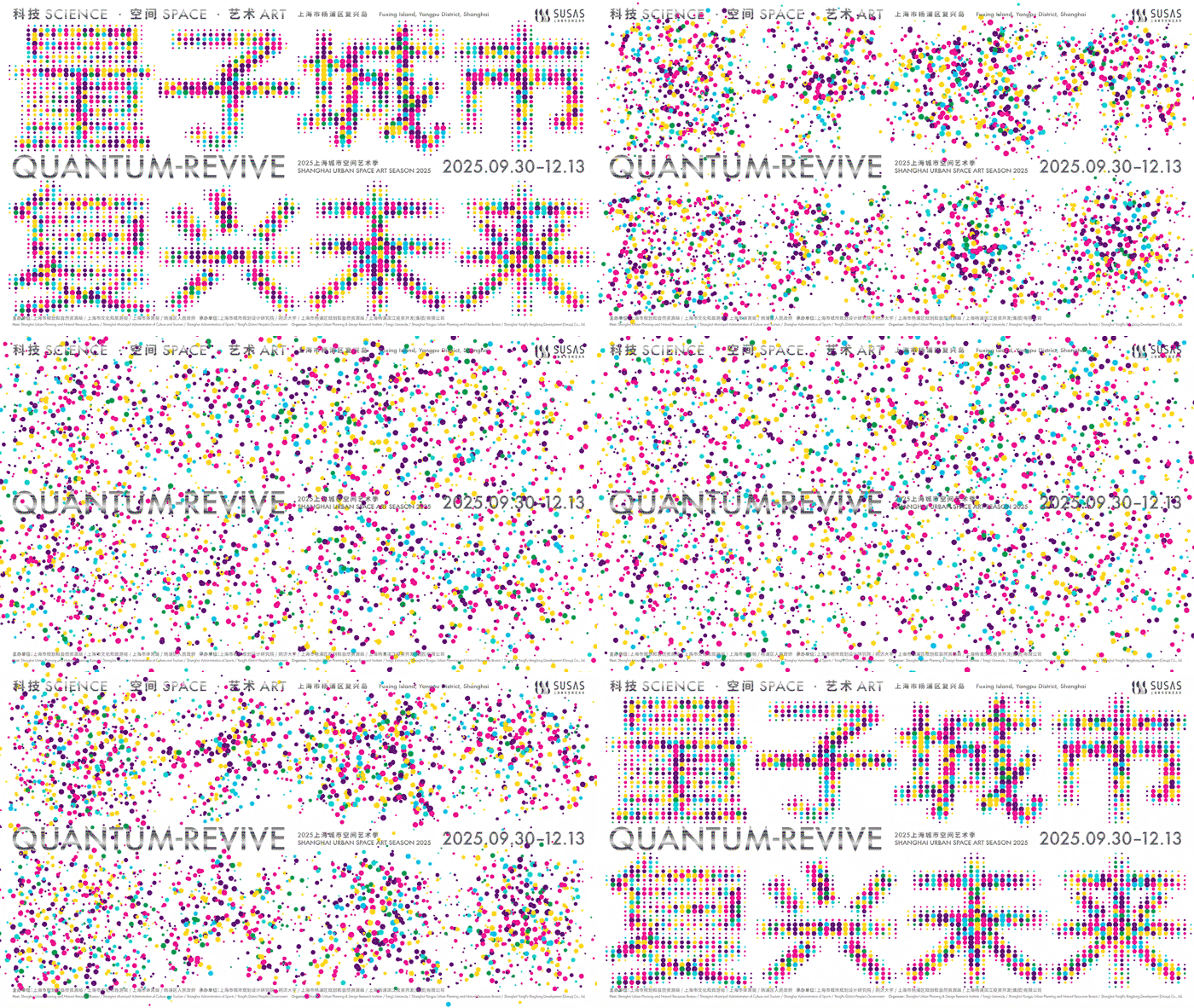
2025|
Shanghai Urban Space Art Season
At Fuxing Island,
「Raiden INST」 brings forth a digital exhibition focusing on the city, the body, and data perception.
For the 2025 Shanghai Urban Space Art Season (SUSAS), we are presenting the digital curatorial projects 「Quantum Apparition」,「Tunneling」, and「Where is Q-Baby」. Through visual observation, physical engagement, and AR interaction, the audience is invited to enter a world of quantum perception. Continuing Raiden INST’s ongoing research into “digital curation” and “bodily experience,” these three sets of works attempt to redistribute our modes of perception in public spaces, empowering the audience to become co-authors of the experience.
Exhibition Items
Quantum Apparition
-
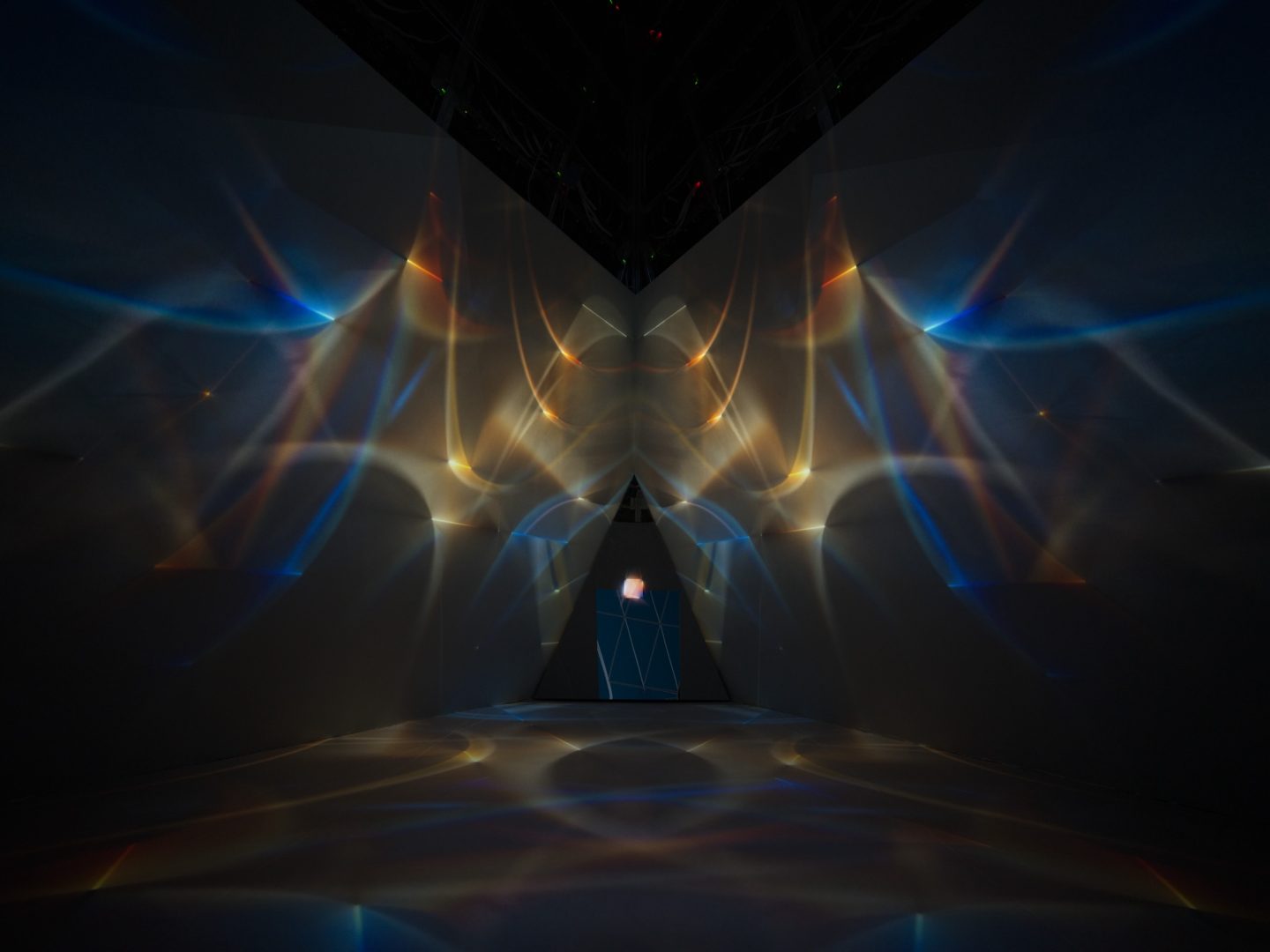
The Ghost of Light
Zach Lieberman
-
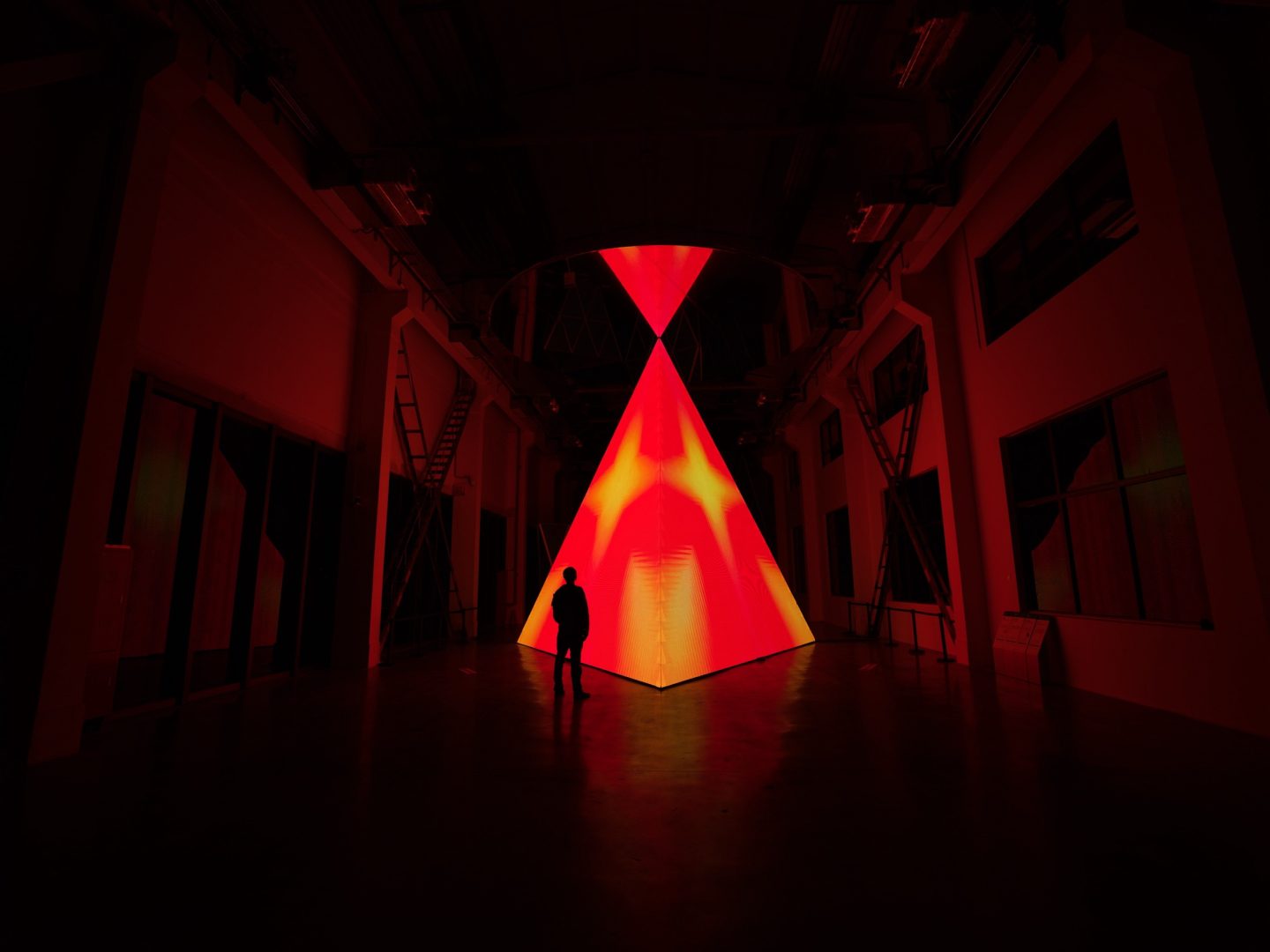
Hub · FUXING
Wang Yi
-
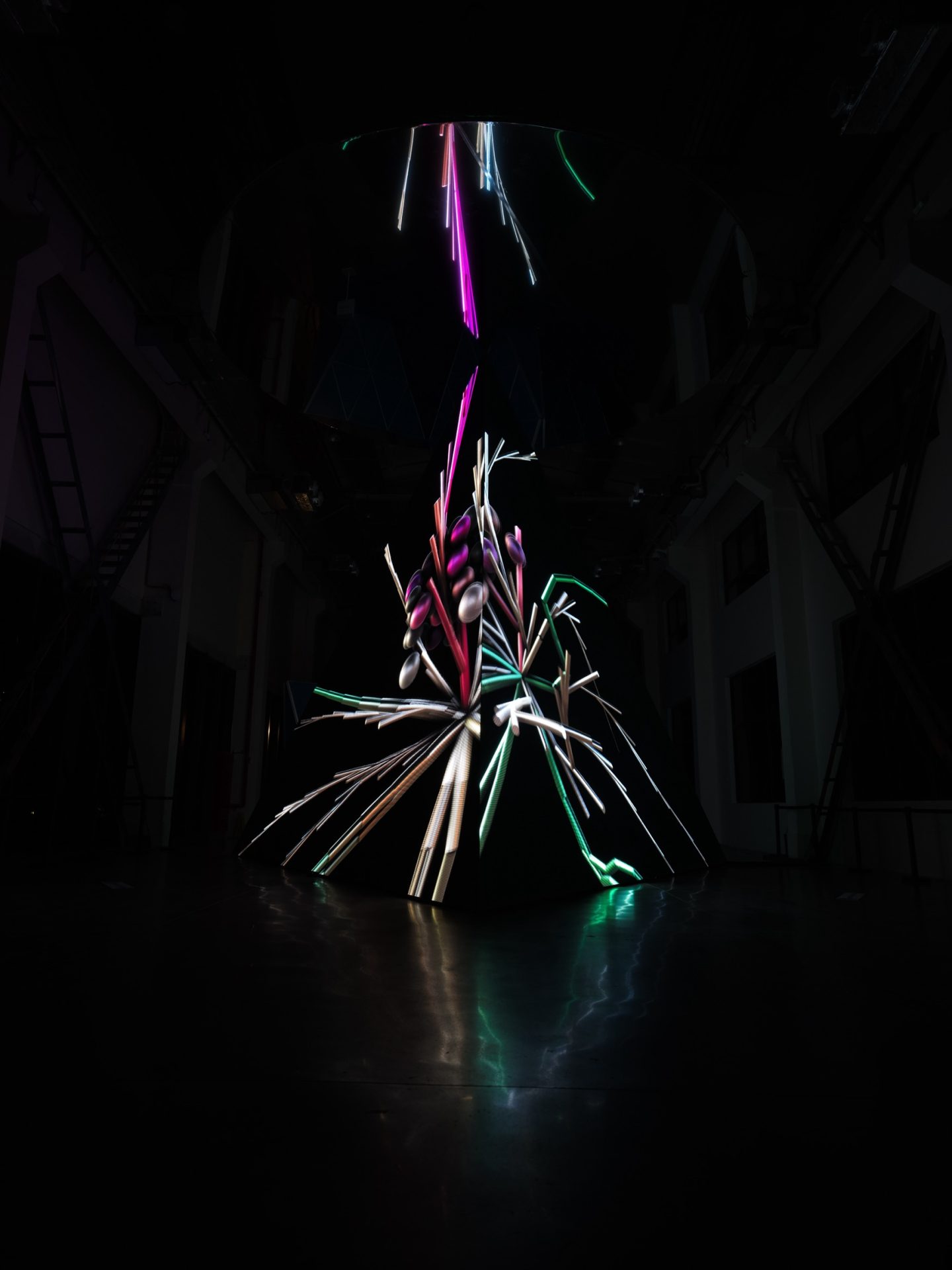
Aquarium (New Cycle)
Marpi Studio
-
Consciousness Collider
Luo Xi
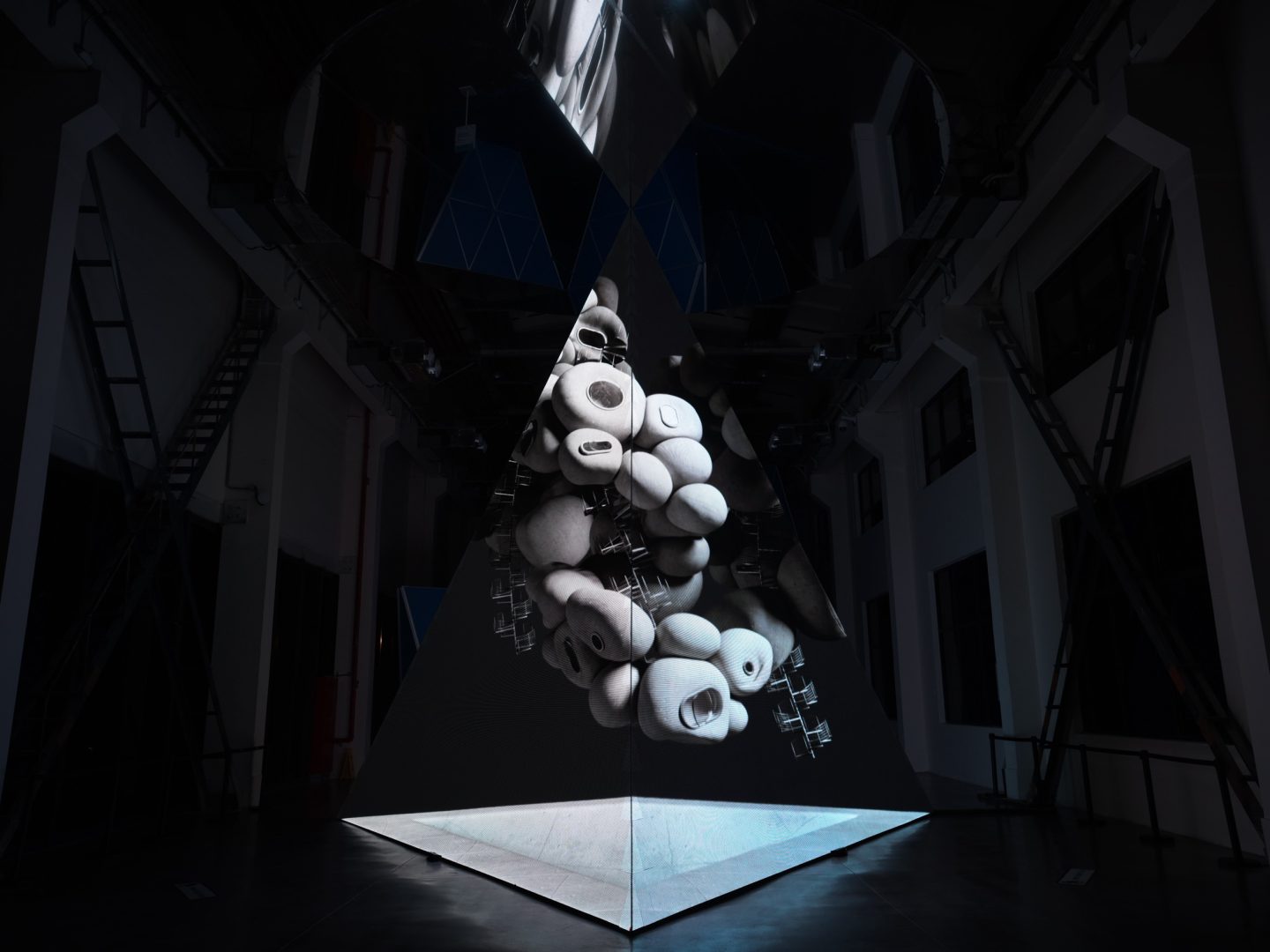
Exhibition Items
Where is Q-Baby?

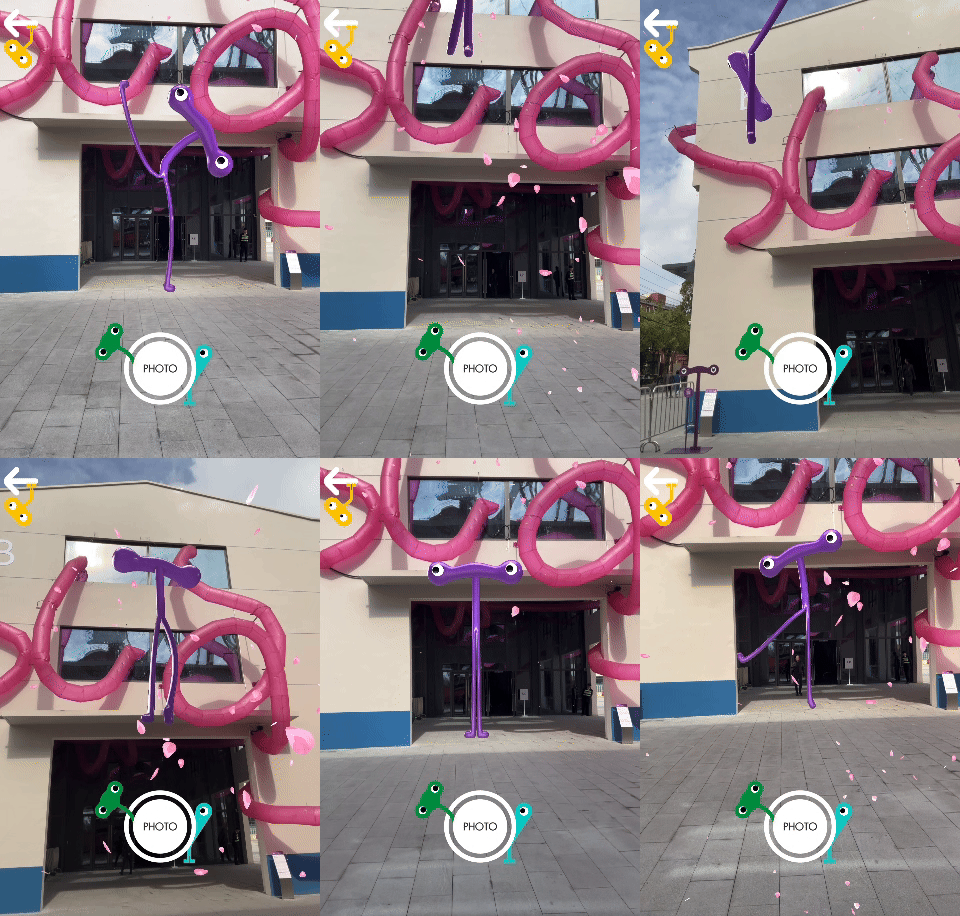
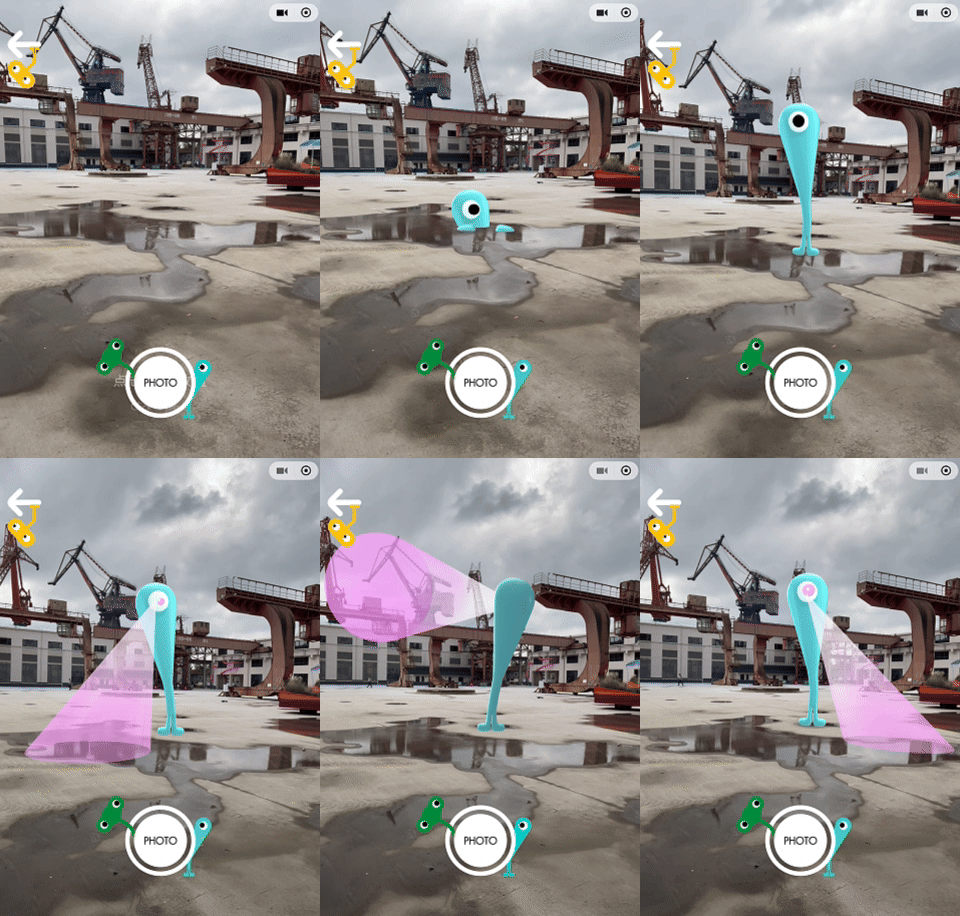
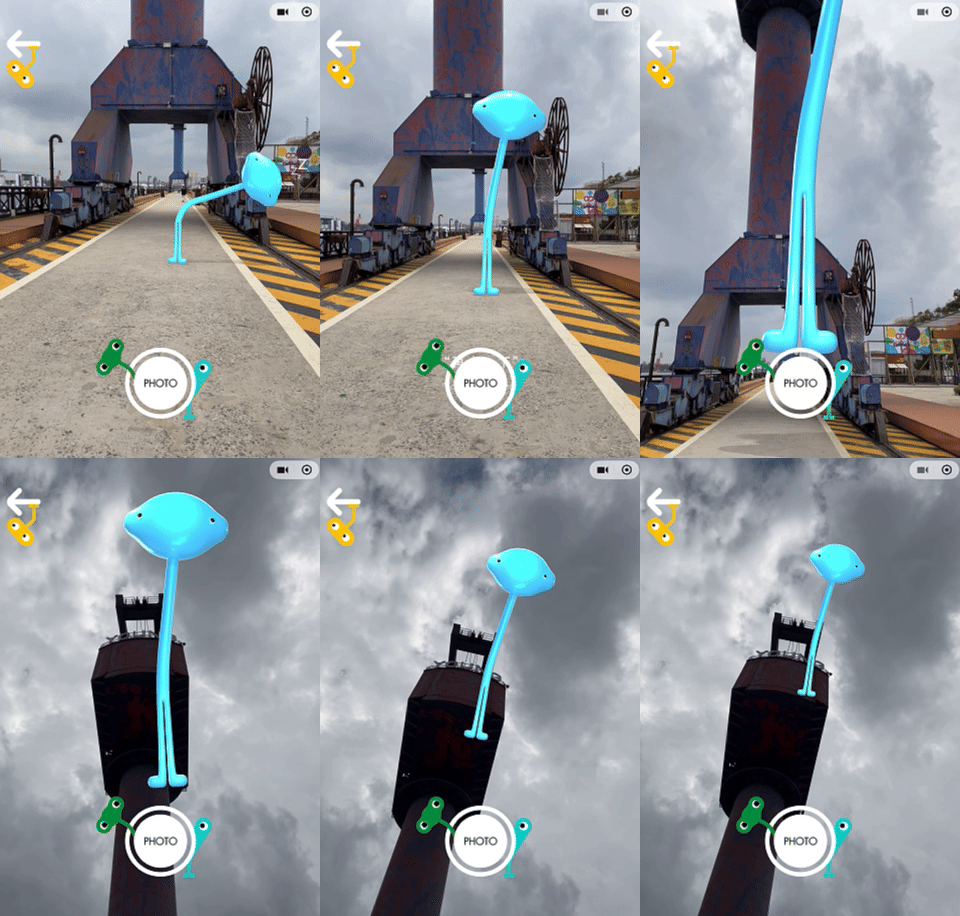
Introduction
Where is Q-Baby? is an interactive art project that combines augmented reality (AR) with urban exploration. By scanning QR codes through a WeChat Mini Program, visitors can meet six characters—Rula, Papi, Dida, Gulu, Kaku, and Momo—scattered across the Fuxing Island exhibition area. Each encounter invites playful interaction, photo-taking, and the unlocking of animations. An AR poster based on the exhibition’s main visual adds another layer to the journey, where a simple wave of the hand sets light particles in motion, opening up further possibilities of discovery.
Exhibition Items
Tunnelling
Introduction
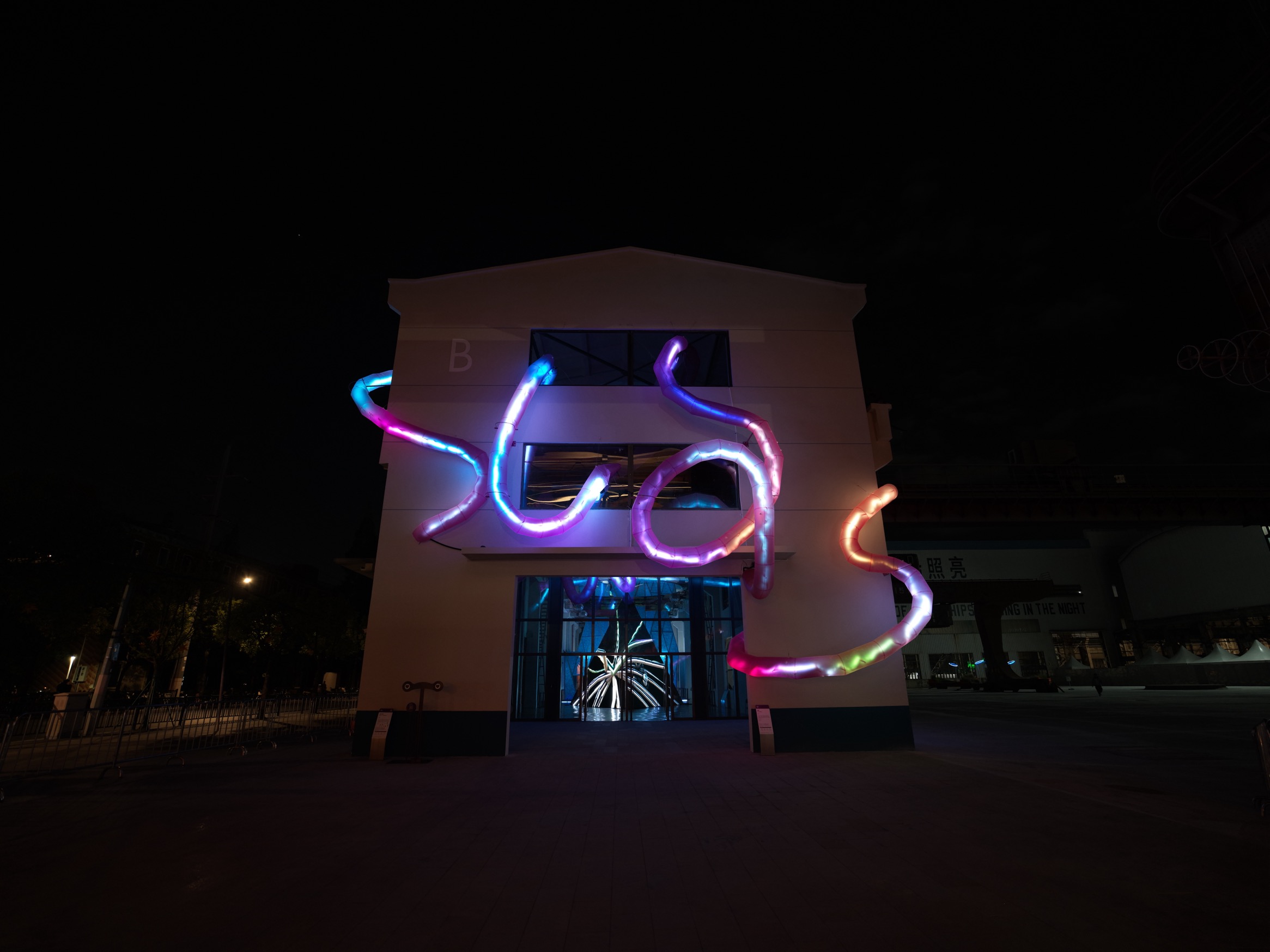
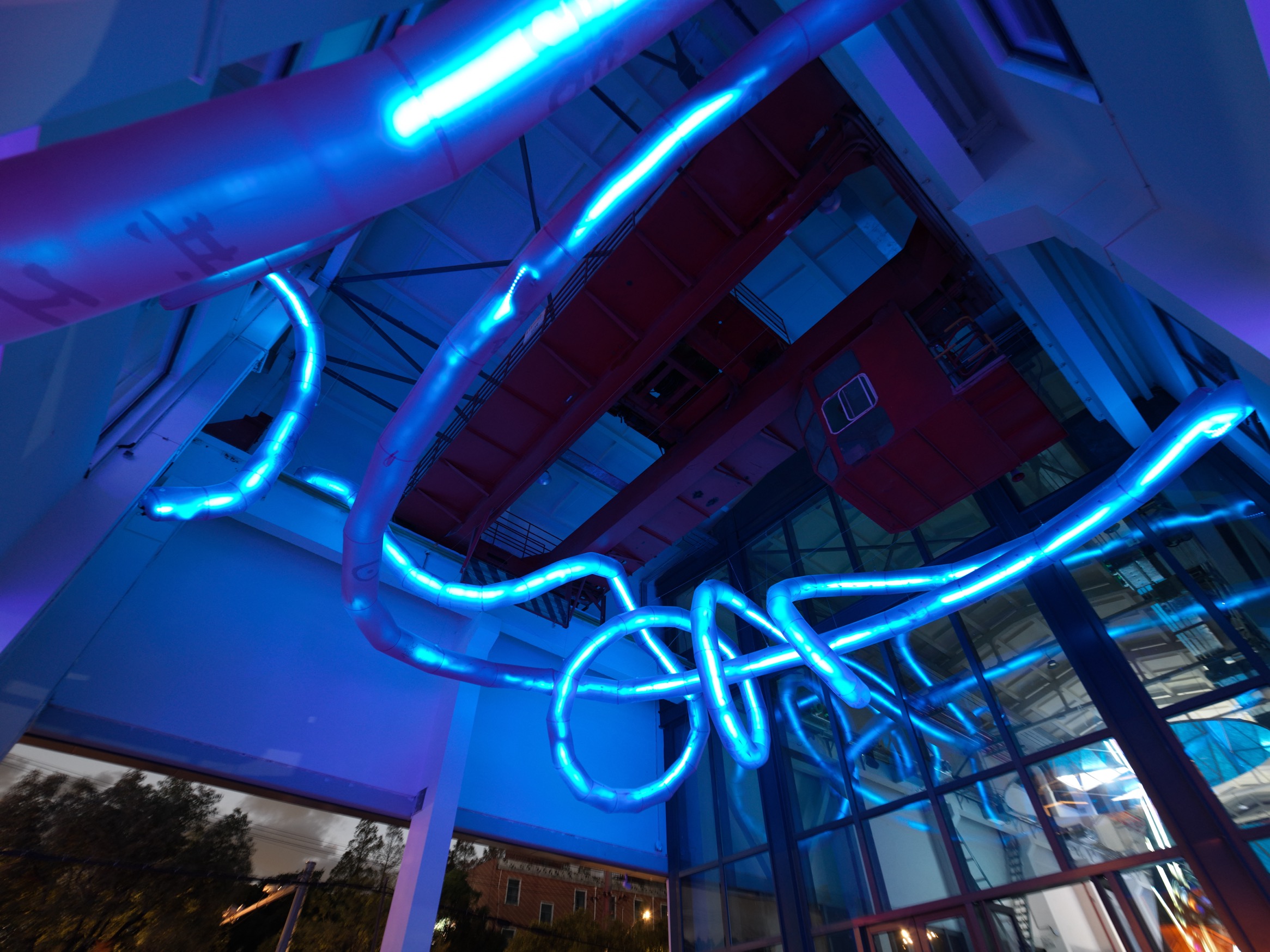
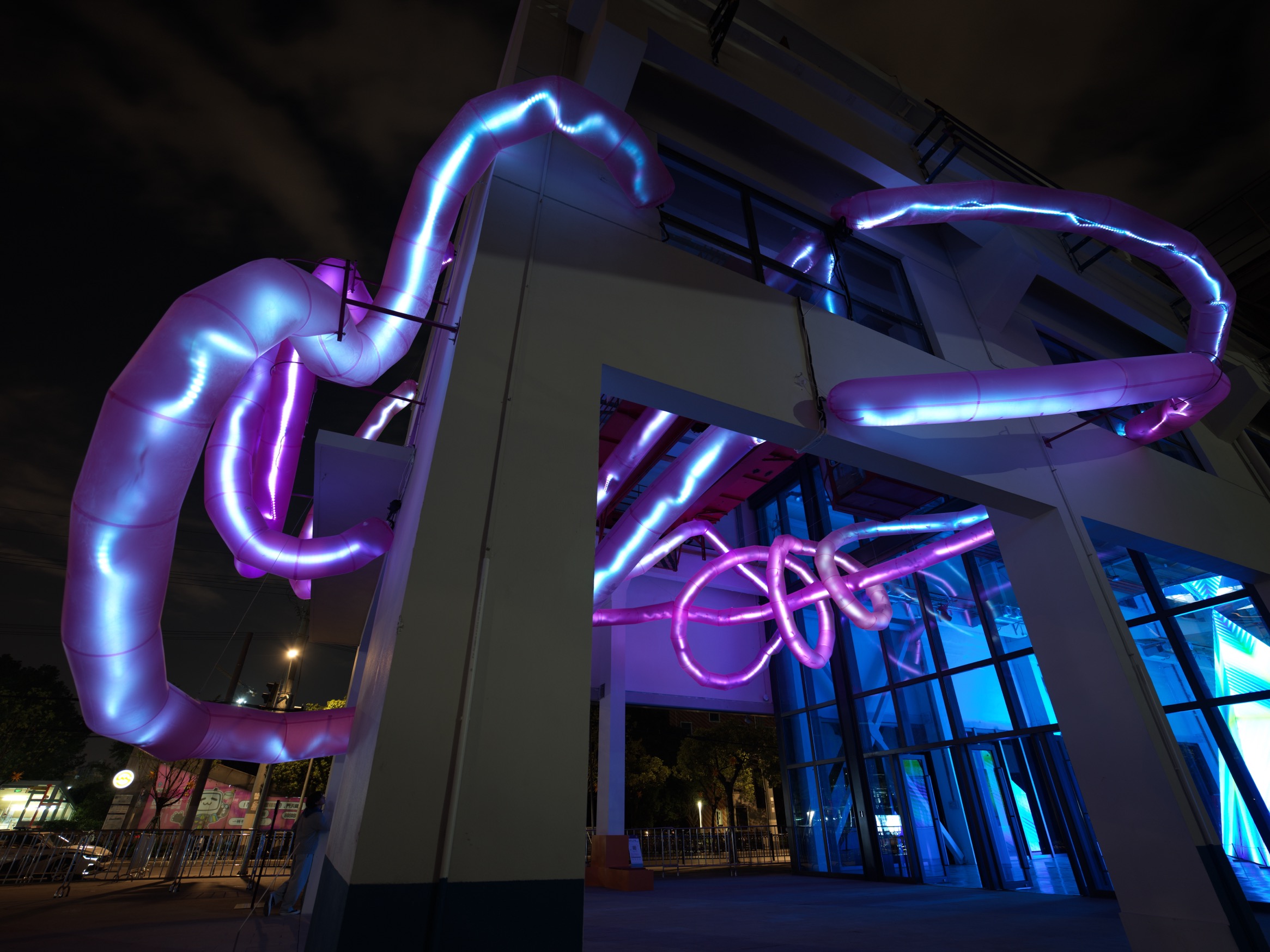
Tunneling is an inflatable interactive light installation. As the audience steps into the space, a “photon” is released into the pipeline, racing swiftly along its path. As the light travels, it illuminates celestial symbols embedded within the inner walls, revealing them one by one. In quantum physics, quantum tunneling refers to the phenomenon in which particles can cross conventional energy barriers, as if passing through an invisible channel. This installation simulates such a phenomenon, while tracing the letters of “SUSAS” through the architectural structure—merging the real and the virtual, the visible and the hidden.