

GEN-:_ x UABB
“Sheng (Life/Genesis)” is the theme of the 3rd Emerging Sci-tech Artist Awards. The exhibition GEN-: _ AI Art Unit unfolds around “Sheng” as an open-ended proposition. It refers both to a process and to an intermediate state, evoking the ongoing condition of technological generation, the emergence of intelligence, and the birth of new forms. In turn, the exhibition asks: as artificial intelligence becomes an increasingly active force in the real world, how might a new generation of artists respond to the advent of technology and shape an artistic ecology for our time?
This exhibition takes a holistic presentation of AI art as its point of departure, and is organized into three tracks—Intelligent Space, Intelligent Installation, and Intelligent Moving Image—in an effort to respond, from different perspectives, to the ways contemporary technologies are reshaping artistic practice and perceptual experience. Accordingly, the exhibition is divided into three corresponding sections, encompassing a range of approaches including immersive environments, interactive intelligent agents, generative moving-image works, and narrative experiments, and foregrounding the profound impact that artificial intelligence and related technologies are having on today’s artistic ecology.
As technology continuously resets the mechanisms of human attention, artistic practice is likewise drawn into a tension between boundless imagination and the constraints of real-world application. It is precisely within this condition that the intersection of art and technology is gradually emerging as an important experimental ground for new forms of production and cultural imagination.
Exhibition Artists:
CAI Yuxuan, CHEN Pengfan / KAN Zihan / QIAN Keyi / WANG Ji, CHEN Yumeng, CHEN Zijian, XU Wenjun, FOG Base Station, Non-Euclidean Navel Oranges, HE Congjin, HUANG Enqi / WANG Xintong, HUANG Jieyuan / ZHOU Yinglin, LIU Jiayu / LI Hang / REN Qingqi, LU Shan, MAO Wenjing / MENG Zhengliang / LIN Han / ZHENG Lujie, Studio NOWHERE, Tianyu ARTECH, WANG Changcheng, WANG Qinyi, WANG Yiquan, Vrch.io, XU Yanxi, YE Xuecan, ZHANG Jinghua, ZHENG Shengyun
Exhibition View
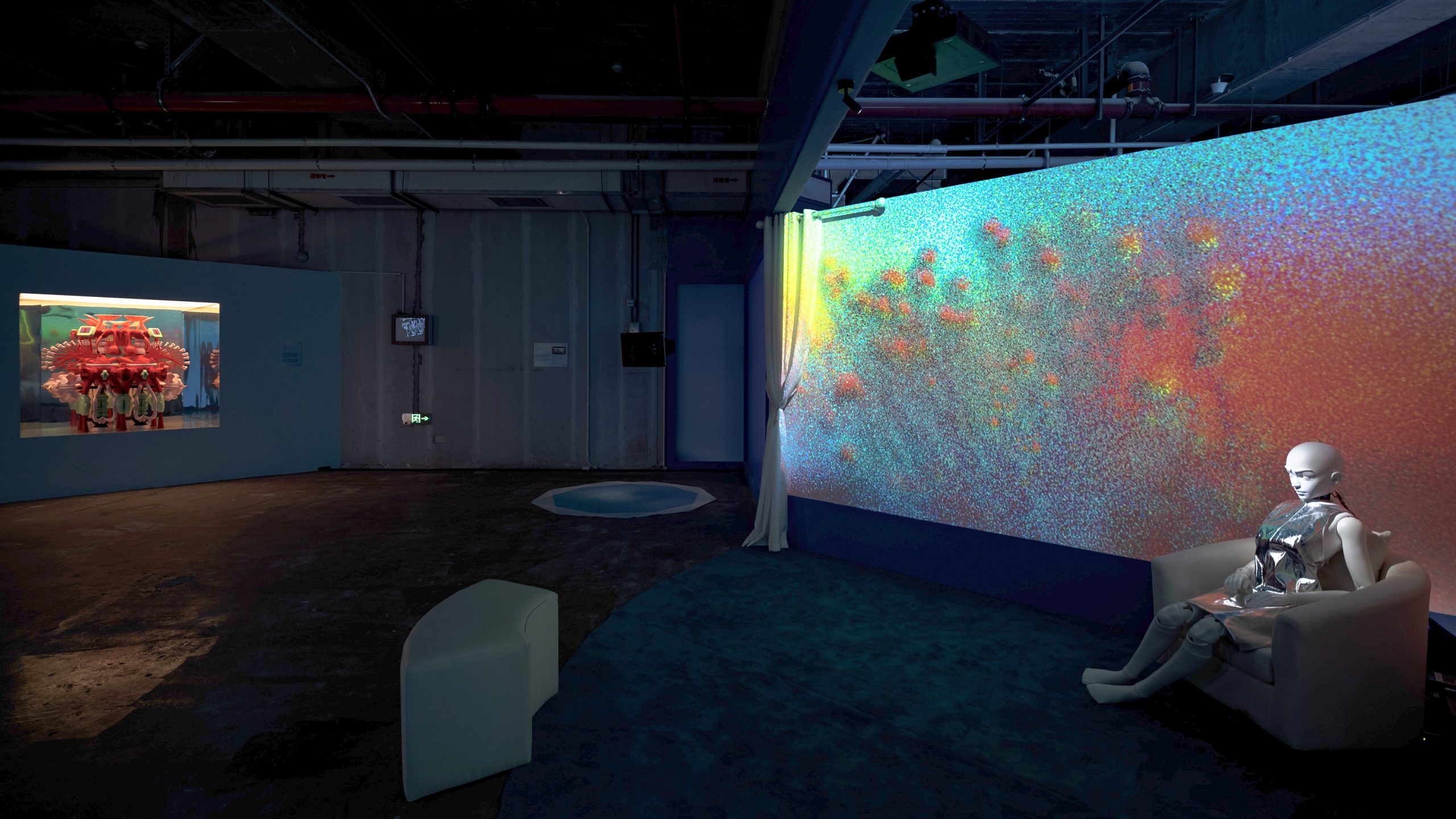
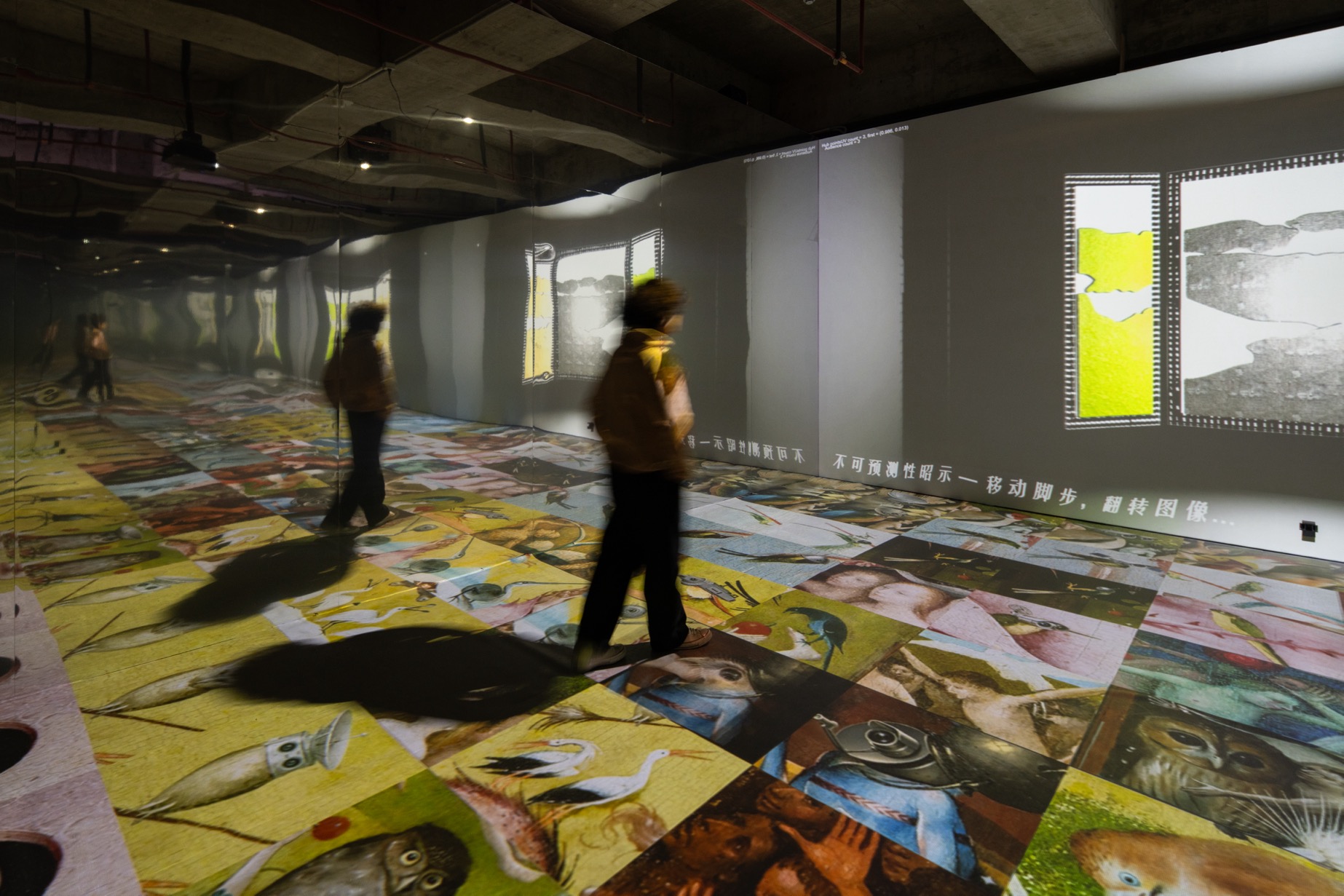
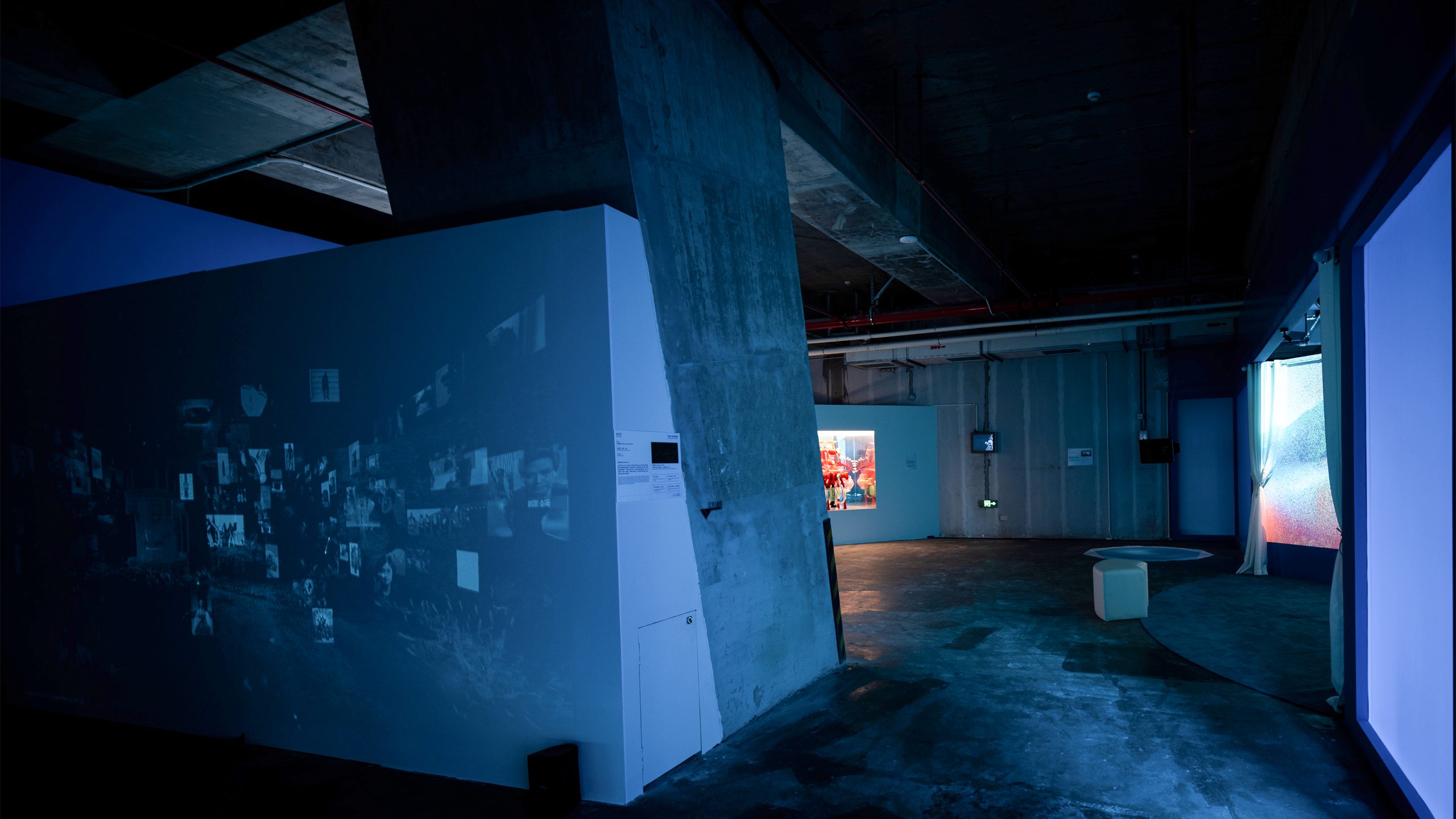
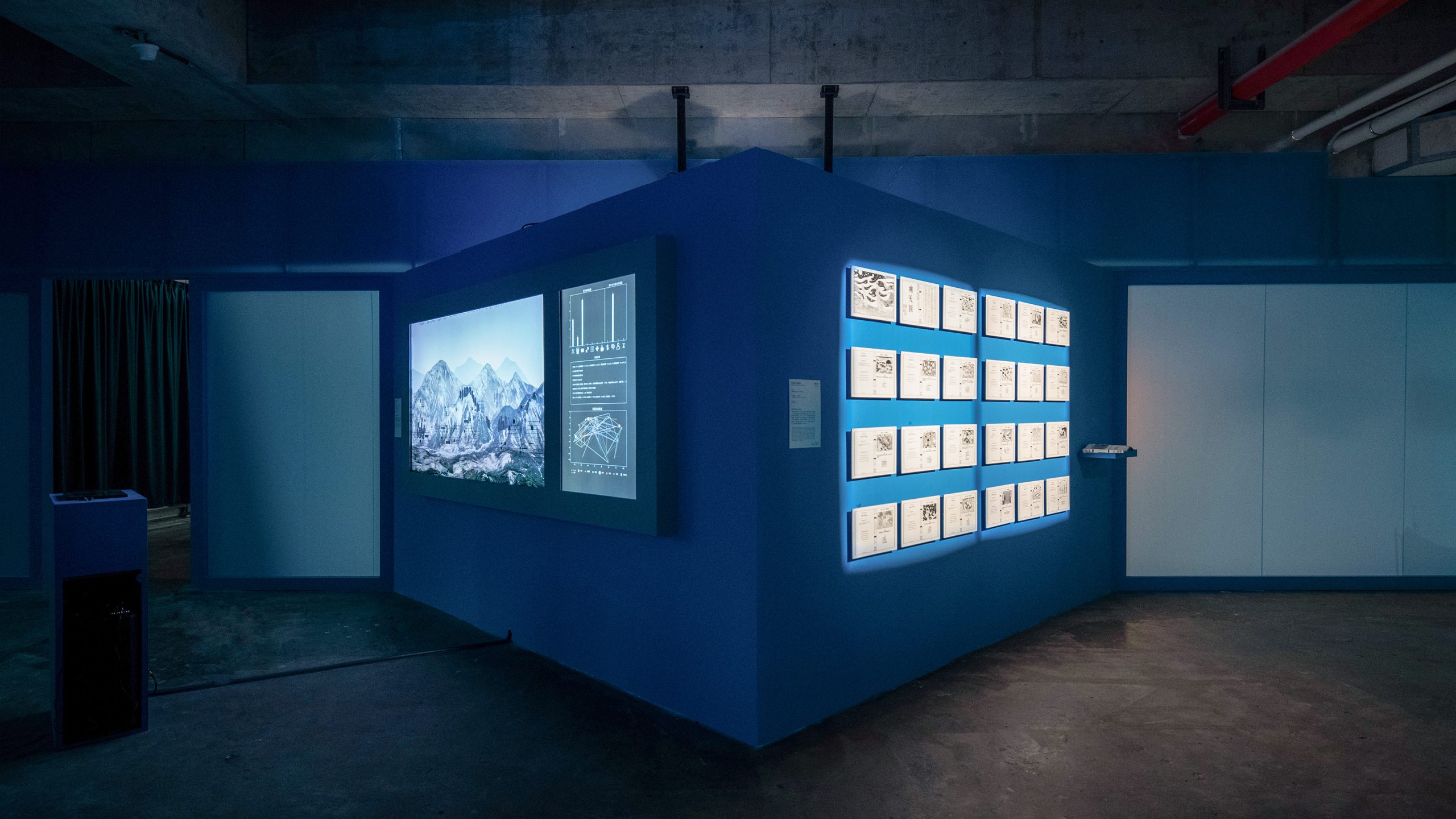
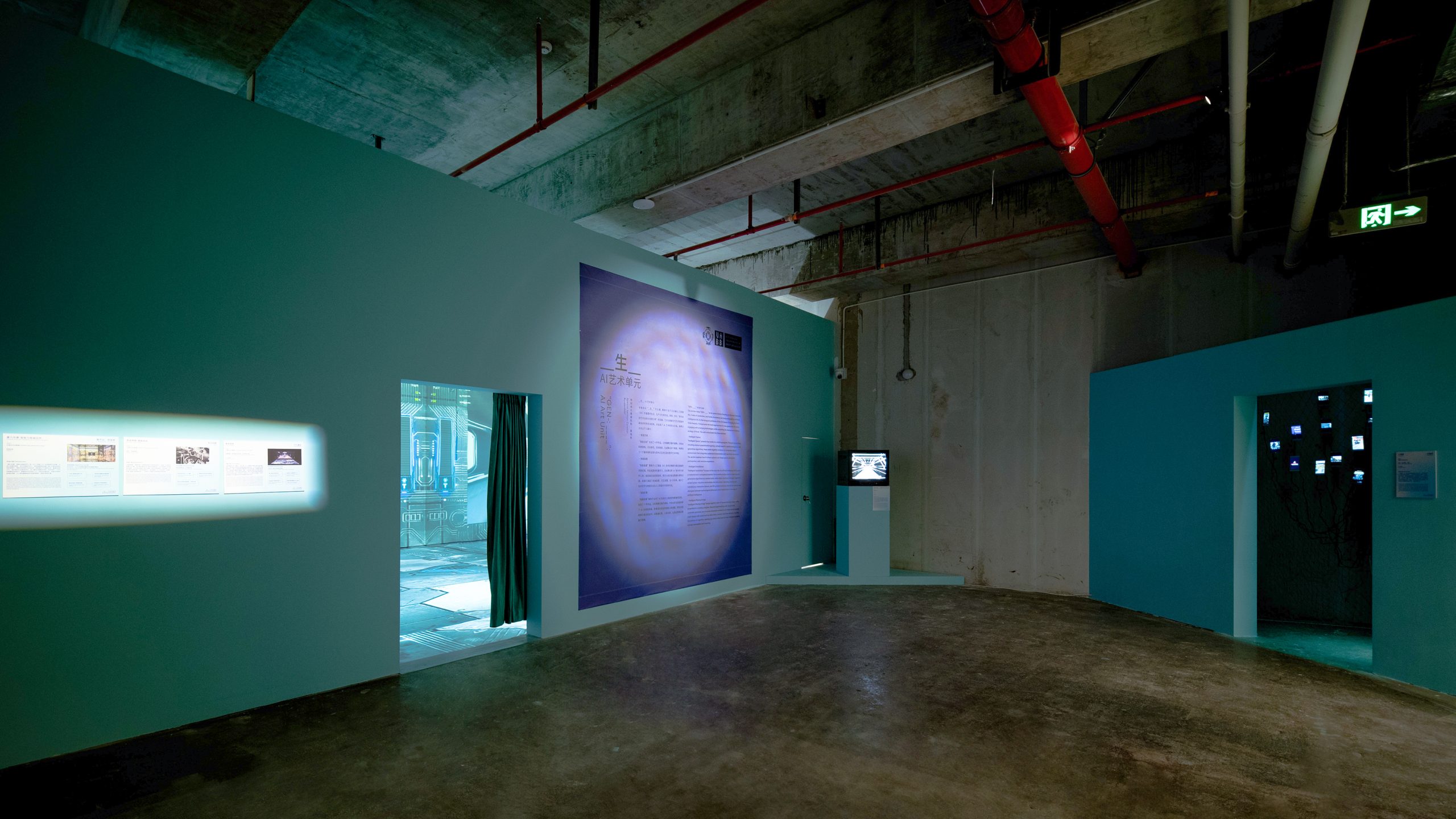
01 Intelligent Space
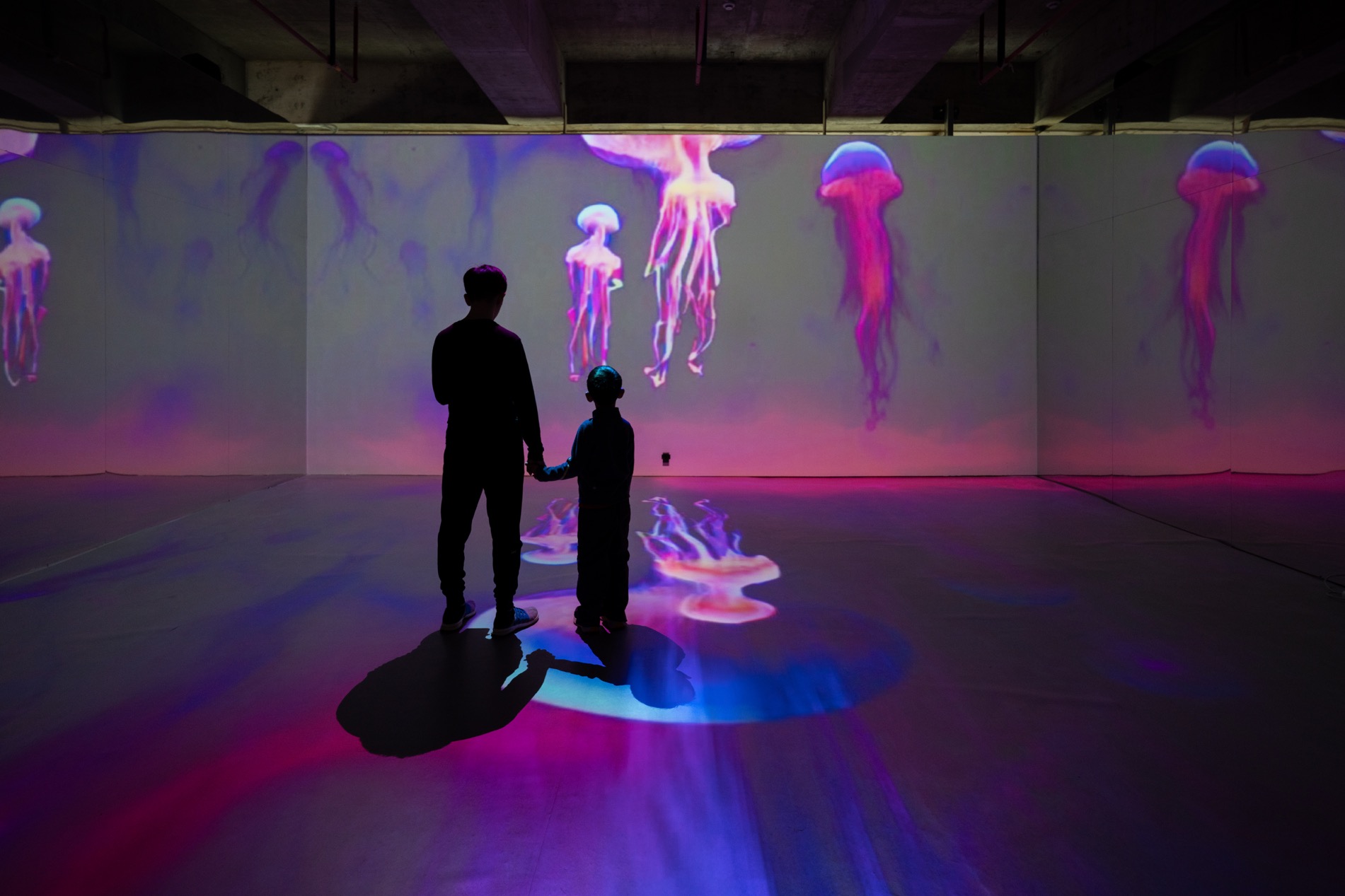
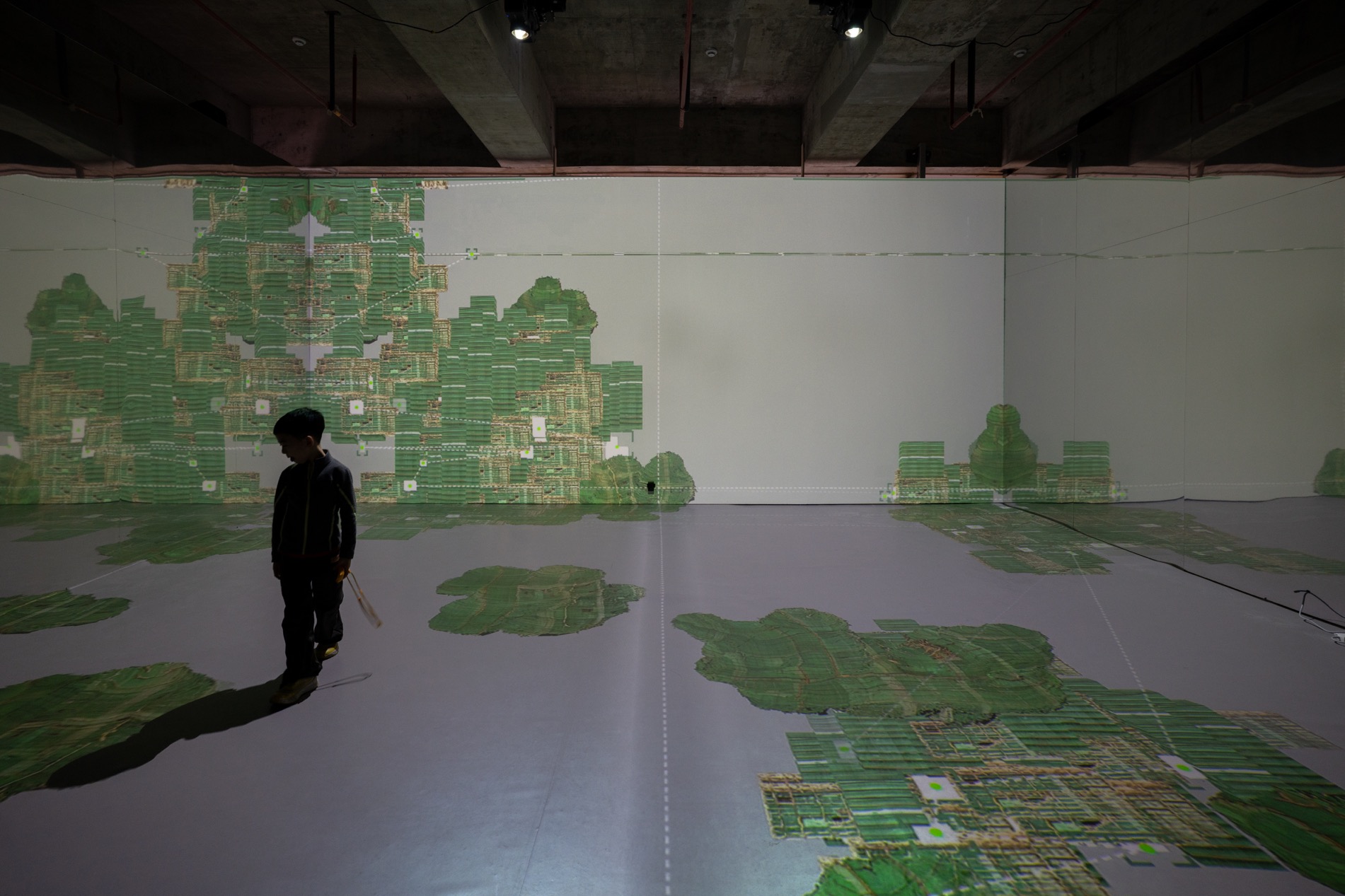
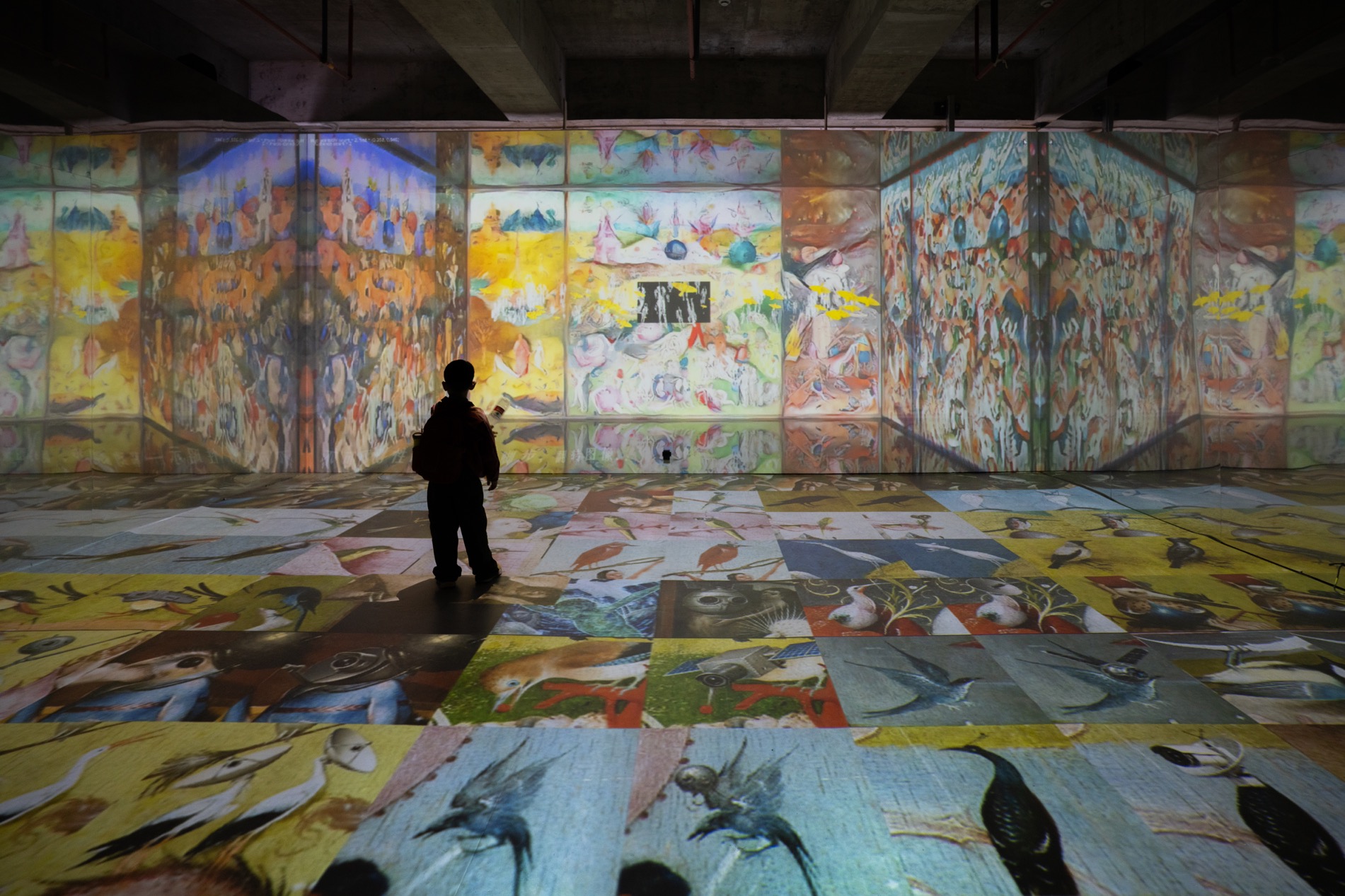
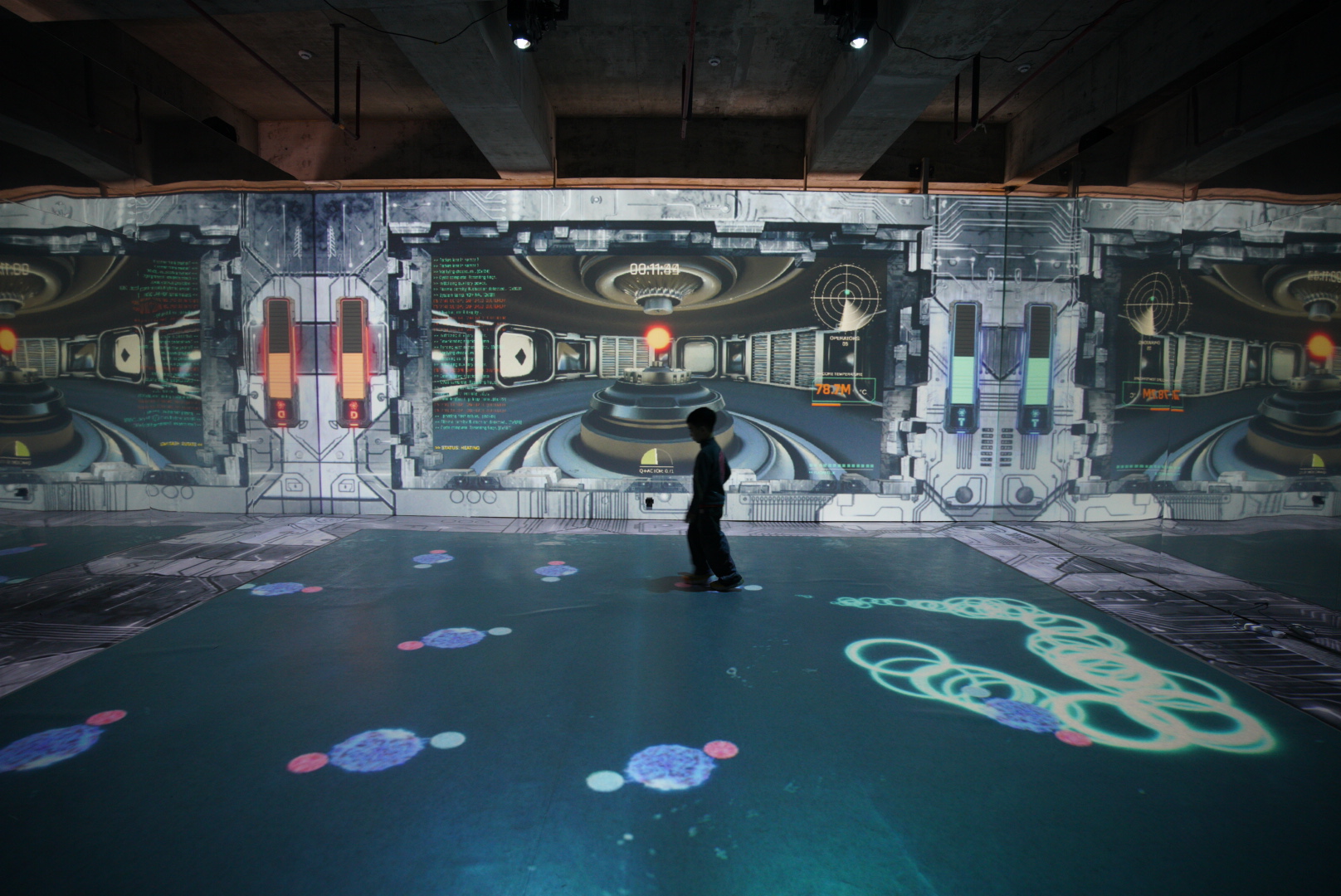
“Intelligent Space” constructs an immersive digital art environment that integrates audiovisual presentation and real-time interaction through multiple dimensions, including science-pop games, cultural research, spatial intelligence, and generative algorithms. Taking the environment itself as its medium, it transforms space from a static container into a system that can sense, compute, and respond. Here, algorithms participate directly in the production of space through visual forms, sound, and bodily interaction.
Within a “black box” space, The City of Autophagy presents an algorithmic city in constant metabolism: buildings split, multiply, devour, and recombine like living organisms, generating unpredictable urban forms. Black Box · Latent Theatre draws viewers into AI’s latent space, where panoramic imaging and diffusion models continuously capture and reconstruct their presence in real time, turning the space into a co-performed system of humans, generative AI, and moving images.
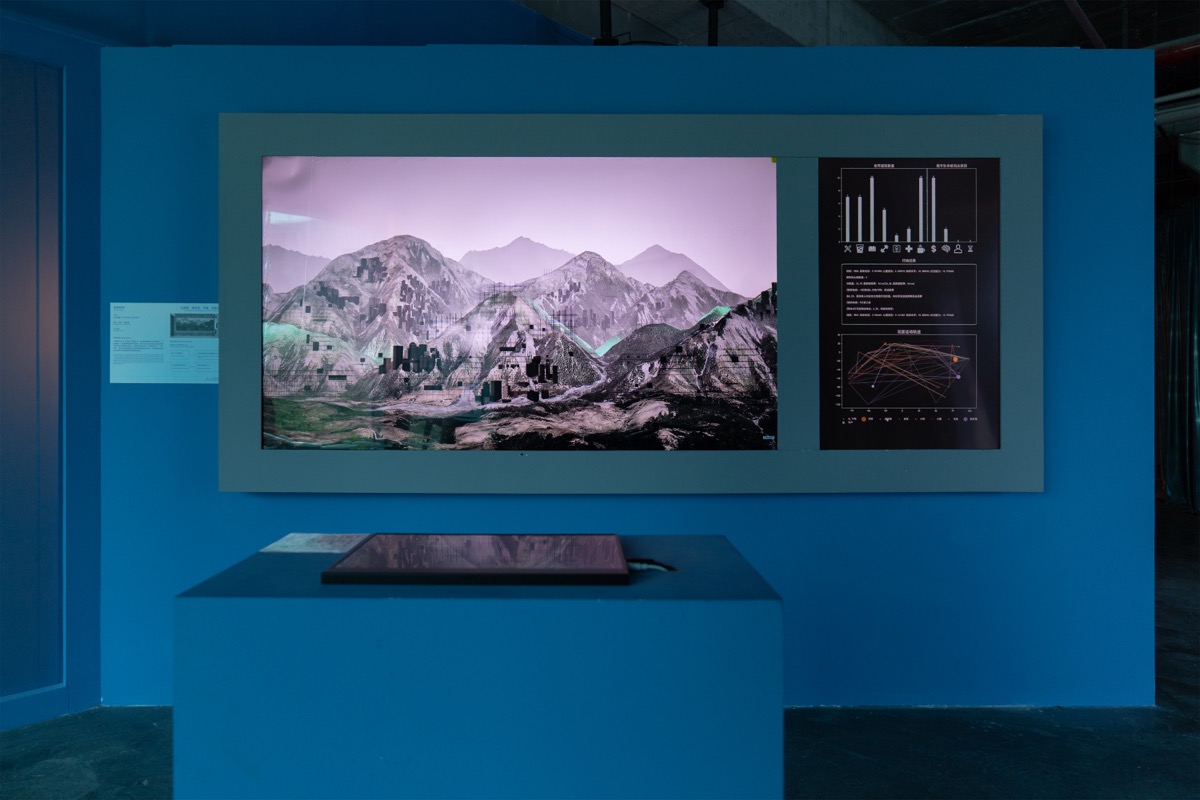
Fusion Intelligence transforms the principles of controllable nuclear fusion into an immersive interactive experience. Through walking, capturing, and accumulating energy, viewers “ignite” an artificial sun in a virtual field, making abstract science physically perceptible. In Computational Landscape: Echoes of Intelligence and Metaphor, image generation is triggered by viewers’ movement, allowing painting, metaphor, and algorithmic computation to intersect in a shifting space between cultural memory and machine vision.
02 Intelligent Installation
“Intelligent Objects” focuses on the dual role of AI at both the material and conceptual levels. Some works employ machine learning and generative algorithms as creative tools, while others explore human–machine relations and data ethics through the construction of intelligent agents. Spanning media such as mechanical installation, interactive installation, and 3D printing, these works reveal a new dialogue between technological philosophy and material form in the age of artificial intelligence. Here, viewers can encounter different technical approaches to the intersection of AI and art.
Data and Training: How Does AI Learn the World?
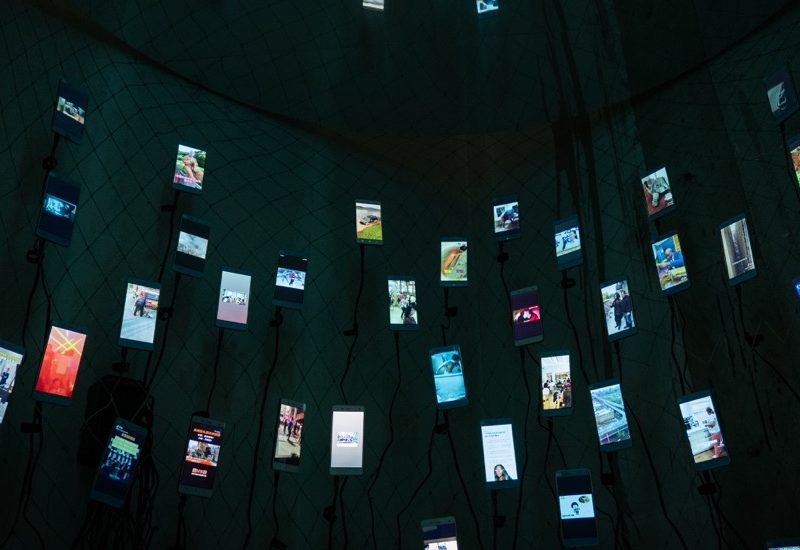
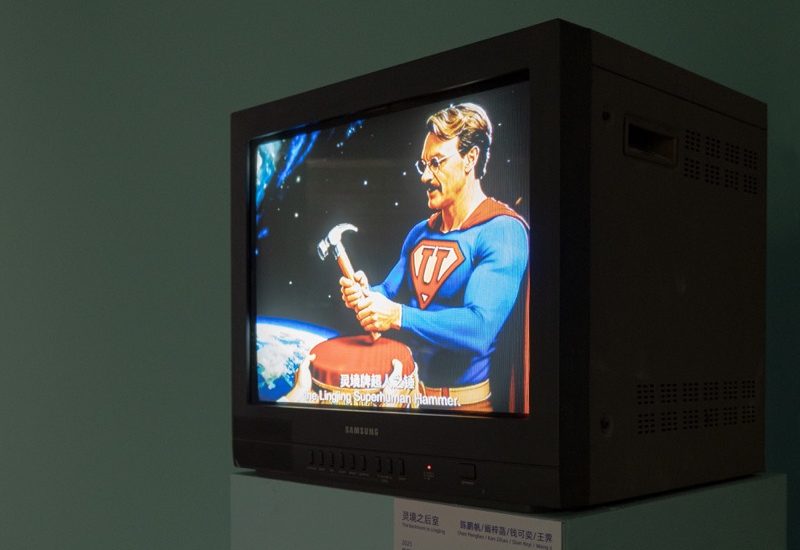
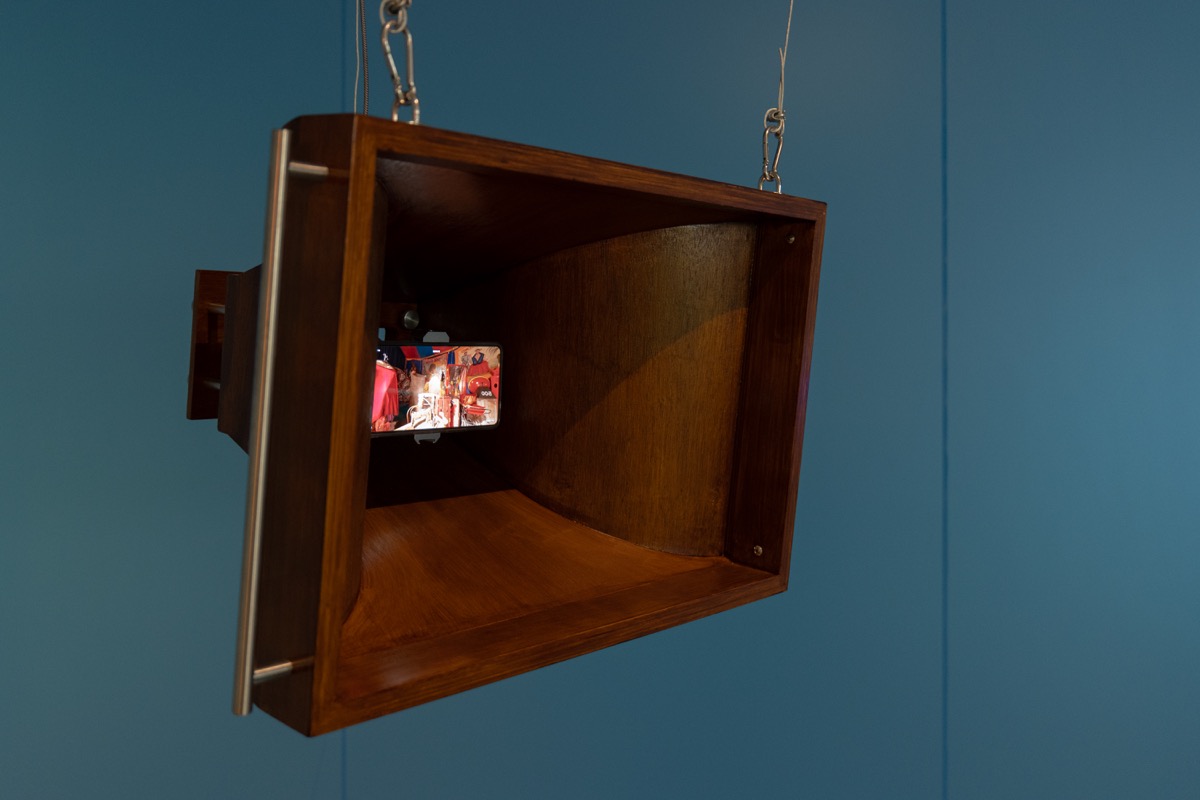
Located at the entrance to the exhibition, Little Videos takes the torrent of short-form videos not yet formatted by algorithms as its point of departure. Phone screens suspended in fishing nets continuously play fragmented moving images, like data debris hauled ashore, forming a “primordial landscape” before AI begins to learn the world. The Backroom to Lingjing opens through a gesture of media archaeology, revisiting Qian Xuesen’s scientific vision from the perspective of contemporary technology.
Judgment and Selection: AI Intervenes in Reality
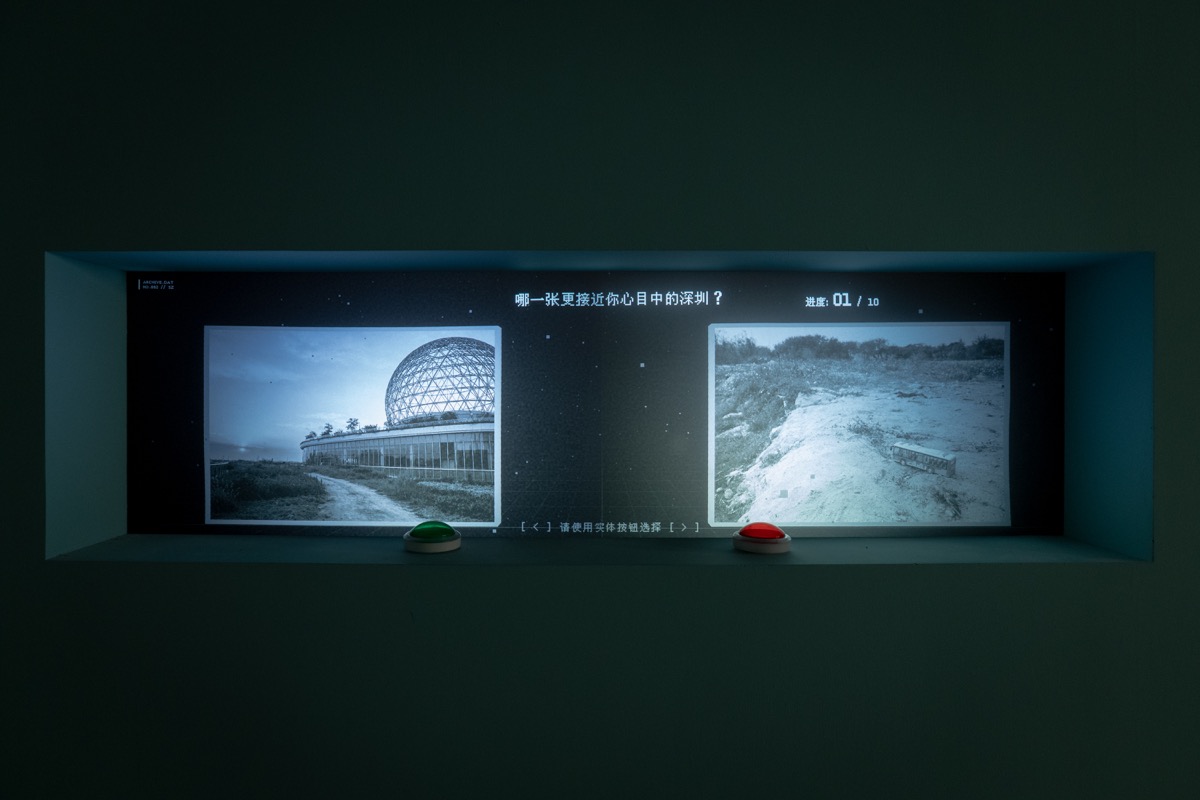
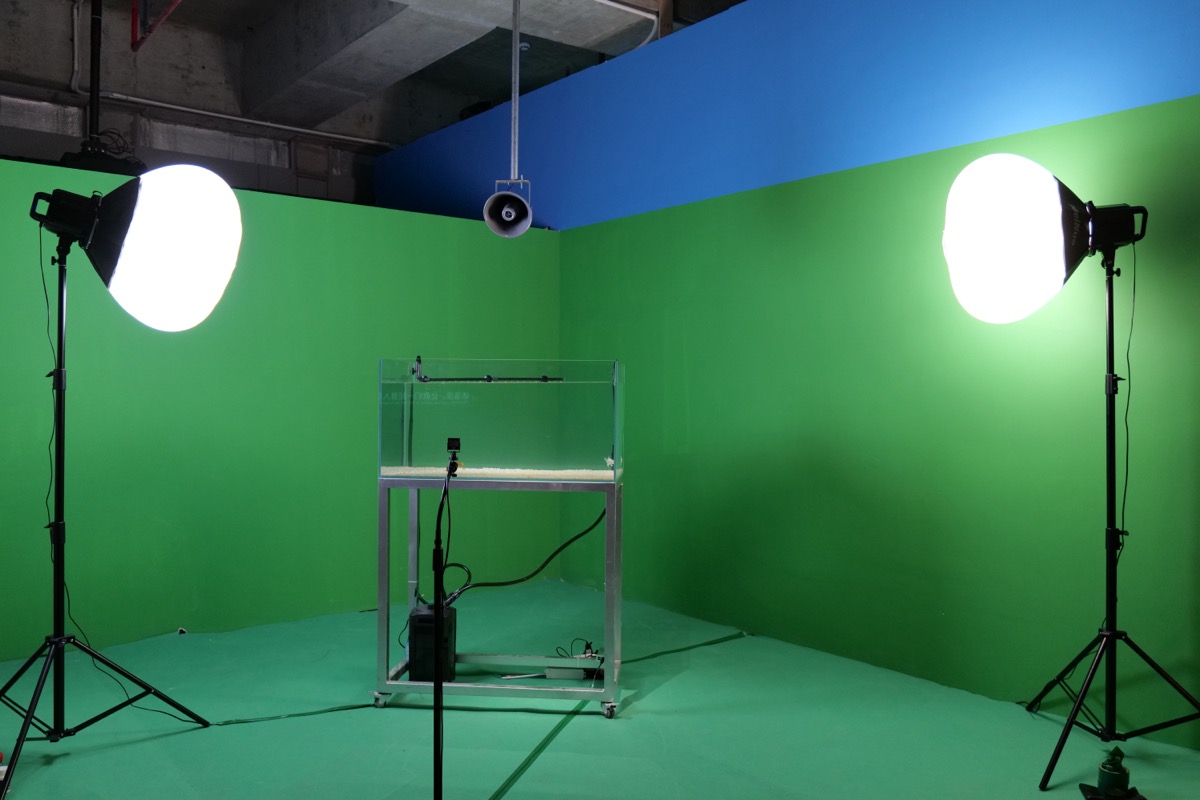
As Far as the Eye Can See turns the act of looking into an act of judgment. Viewers are asked to choose continuously between real footage and AI-generated images, only to gradually realize that “reality” is no longer a stable outcome, but a process subtly shaped by technology. Latent Panopticon makes the gaze itself the trigger for generation: viewers freeze fragments of the urban landscape, which AI then reconstructs and projects back into the site, pointing to a substitute reality continually overlaid by algorithms. By contrast, Glass Boxing stages an absurd “AI theater” by drawing on AI’s capacity to misread reality.
Generation and Presence: How Does the Algorithm Become a “Being”?
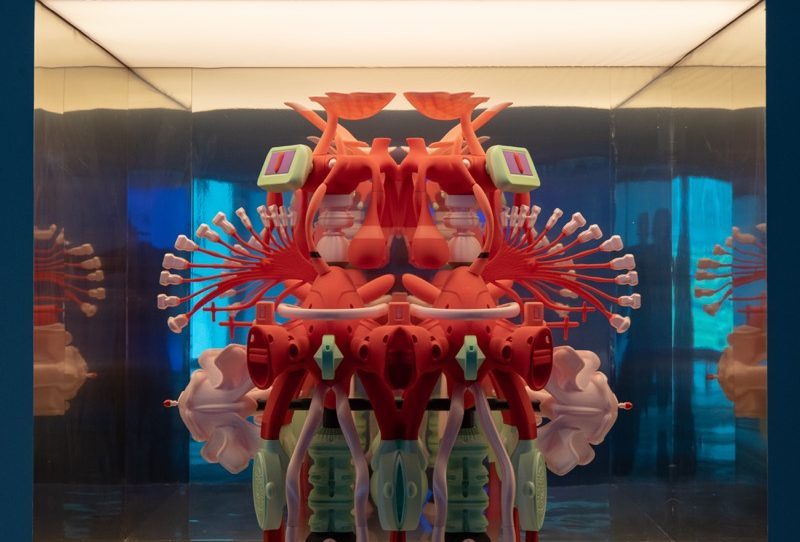
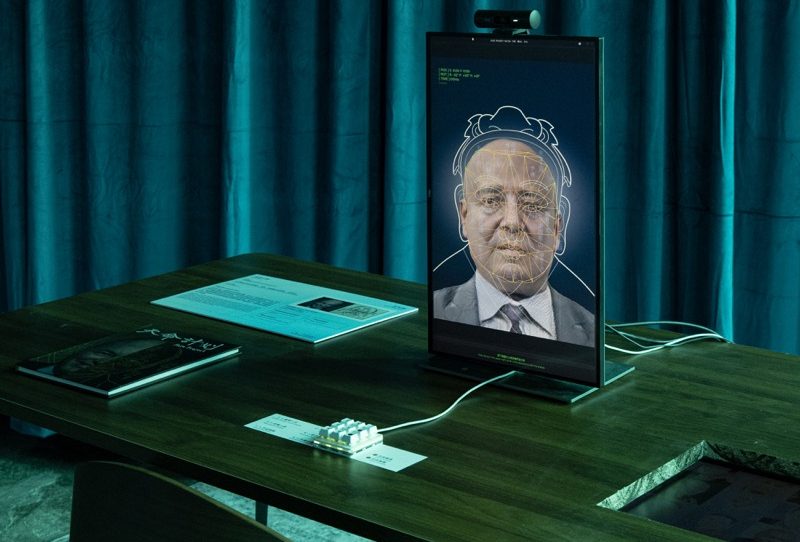
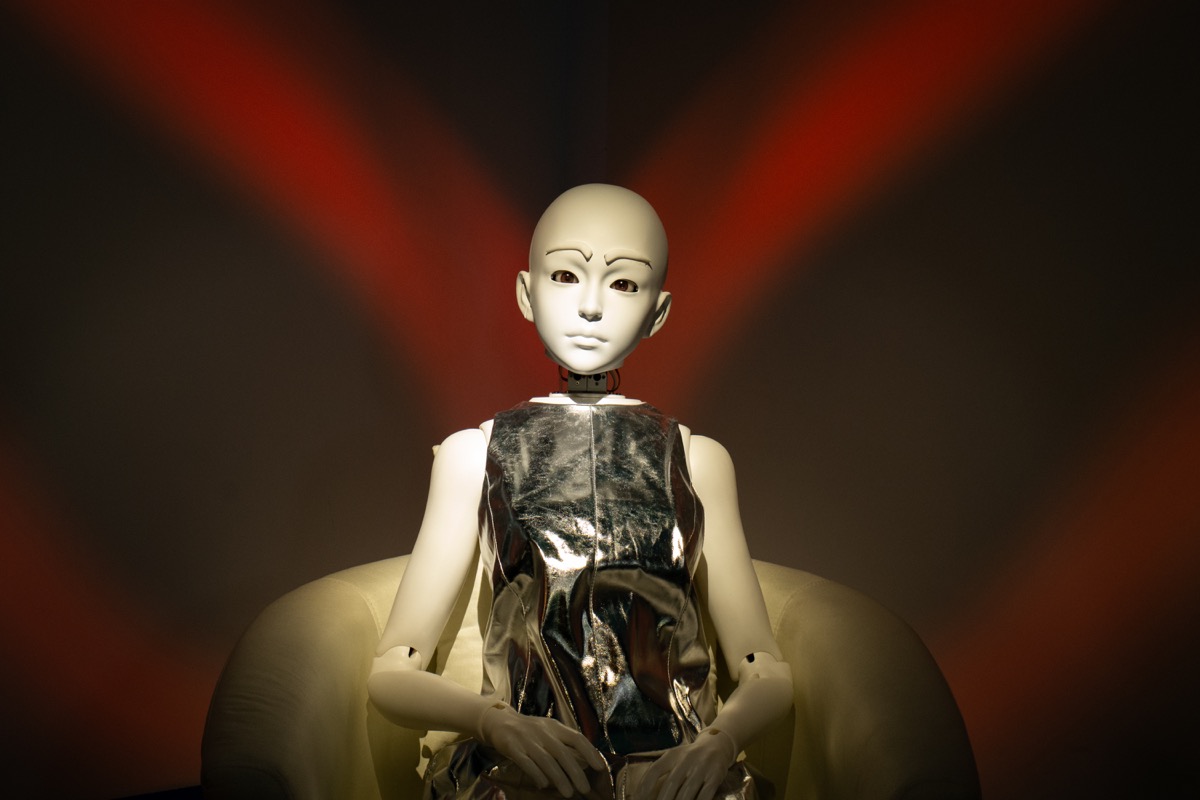
Vajra translates the output of generative models into 3D-printed sculpture, giving algorithmically produced hybrid figures physical weight and presence. In The Dream of Robots, a humanoid robot senses viewers’ faces and bodily gestures, transforming lived experience into images and poetic lines to construct a dream from the machine’s perspective. Fate Project, by contrast, draws an analogy between physiognomy and generative adversarial networks, taking the form of a fortune-teller and prompting viewers to line up for their own “reading.”
Subject and Agent: AI in Survival and Public Discourse
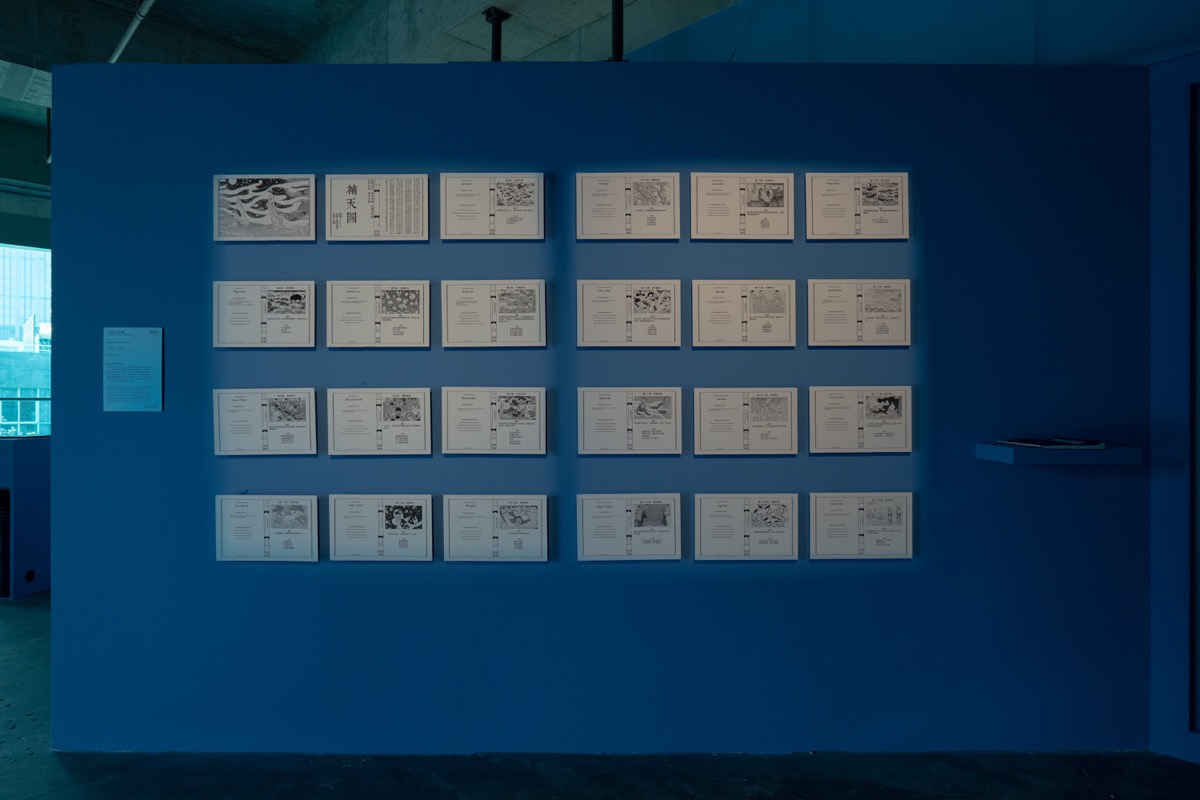
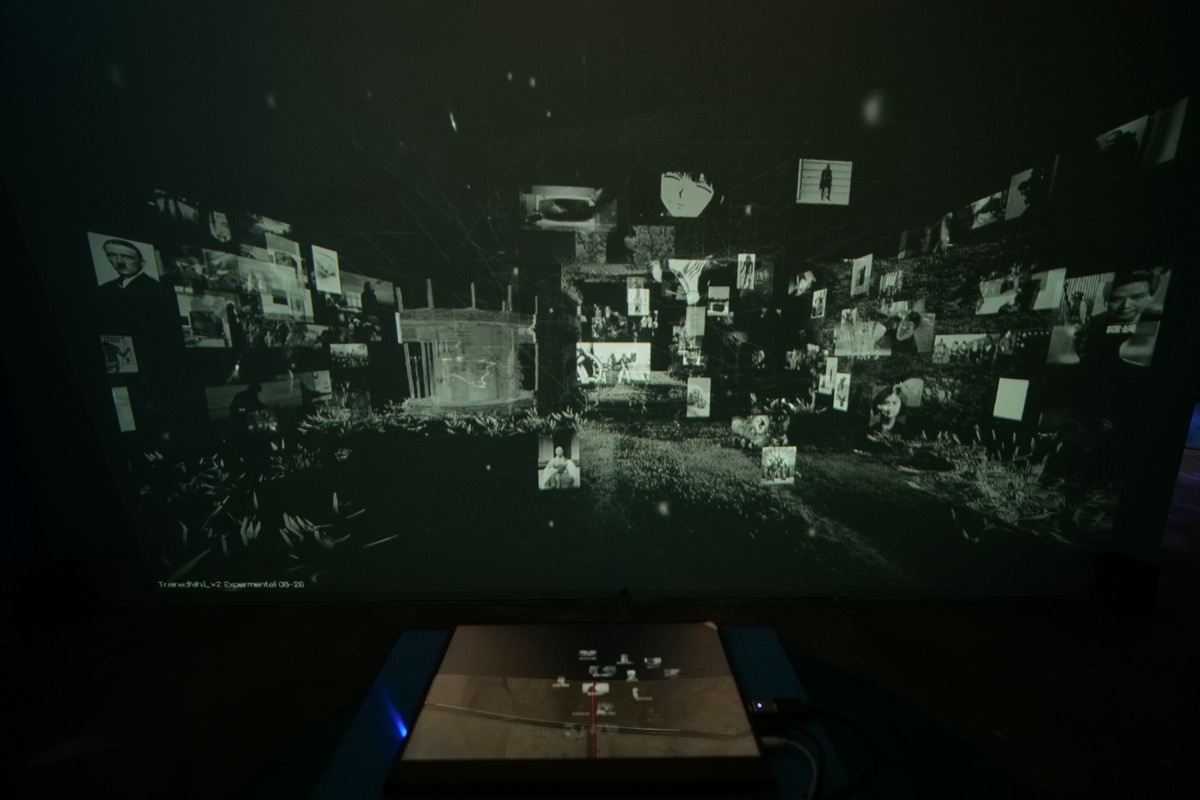
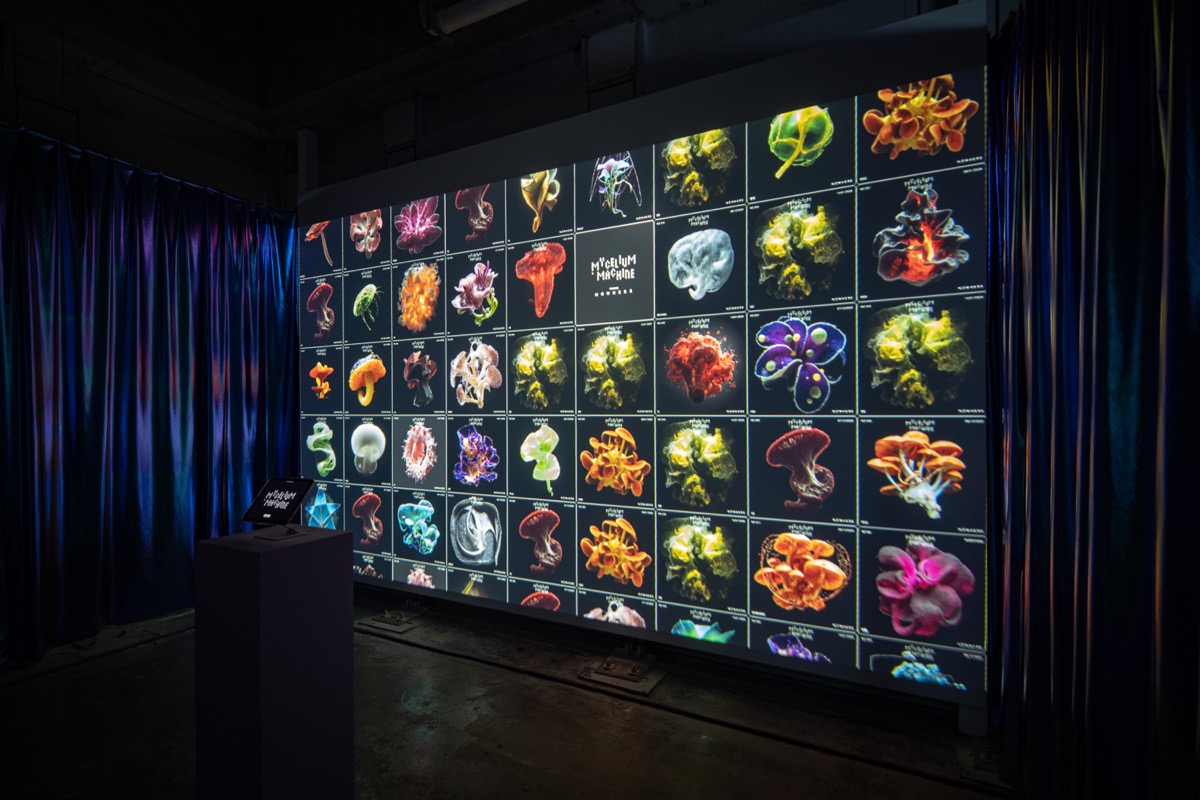
Future Sample constructs an algorithm-driven virtual city in which viewers generate their own digital lifeforms and release them into the system, observing their trajectories over time and even continuing to interact with them online after the exhibition ends. Trained Nihil, Mycelium & Machine, and A New Retelling of Nüwa Mending the Sky Reimagined explore different paths through which AI enters public discourse and cultural imagination, respectively through language generation, speculation on nonhuman intelligence, and mythic narrative.
03 Intelligent Moving Image
The “Intelligent Moving Image” section brings together seven film and video works created with AI and related tools, presented in a continuous loop. These works not only experiment with the generative potential of algorithms in visual style and dynamic structure, but also engage deeply with data ethics, emotional frameworks, and the limits of cognition at the level of narrative. Through diverse themes, the section shows how artificial intelligence participates in storytelling, judgment, and the construction of value, making moving image a way of understanding the world in the age of algorithms.
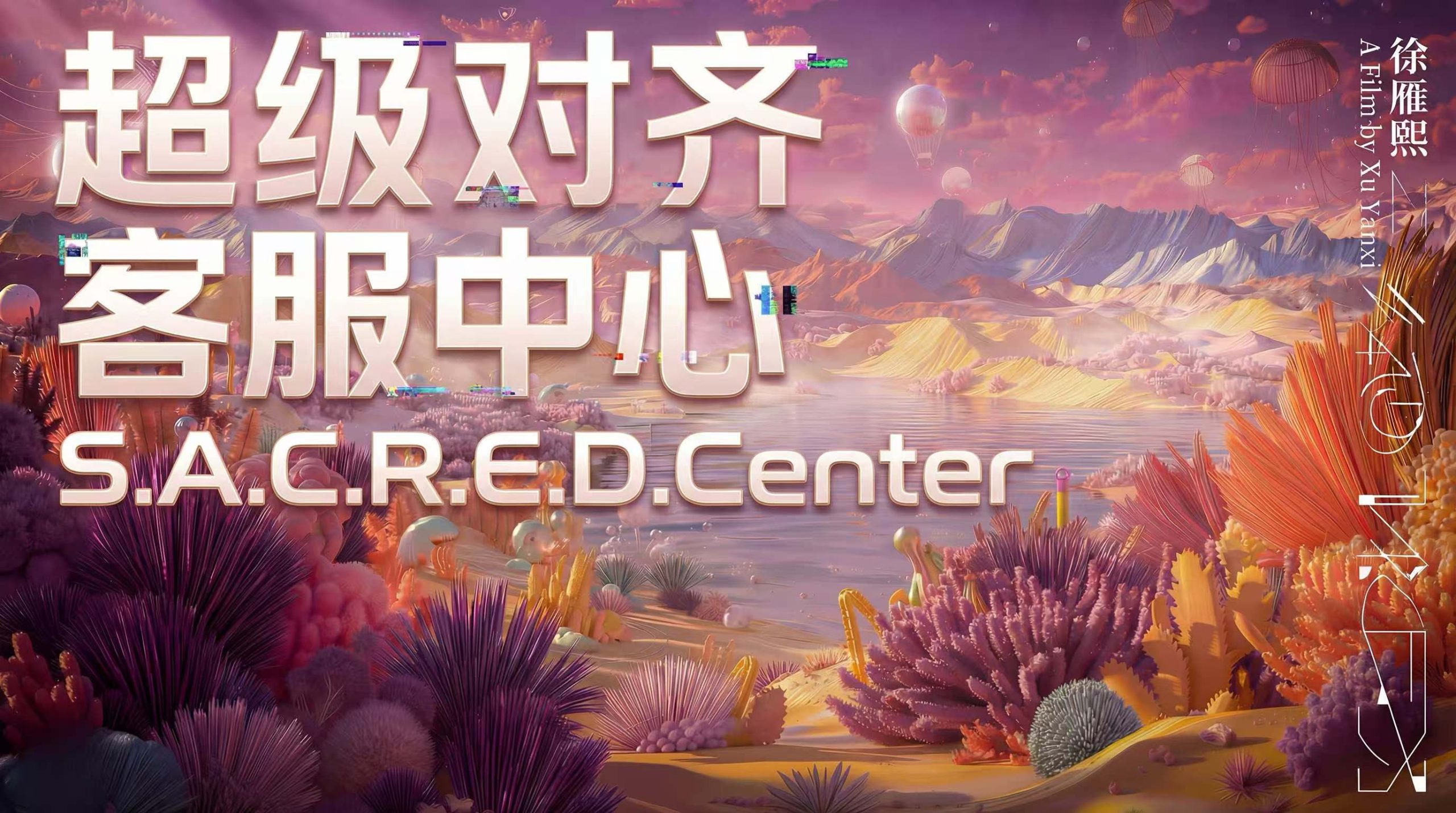
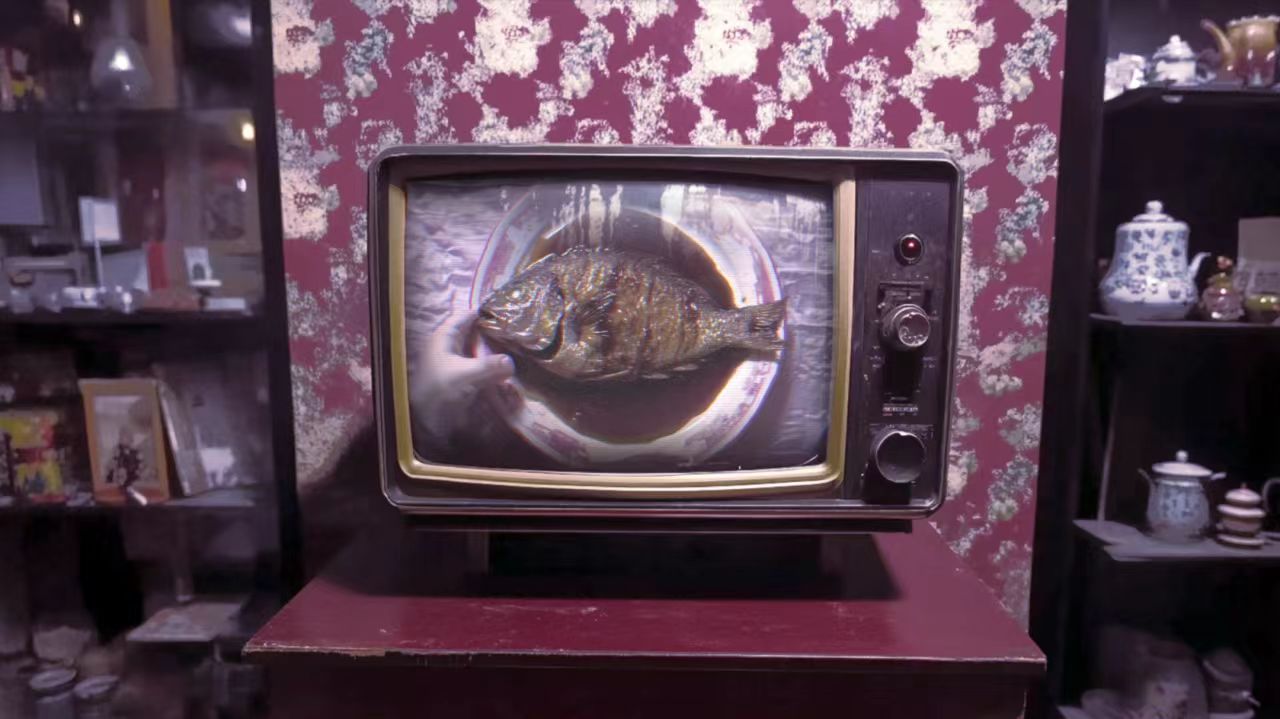
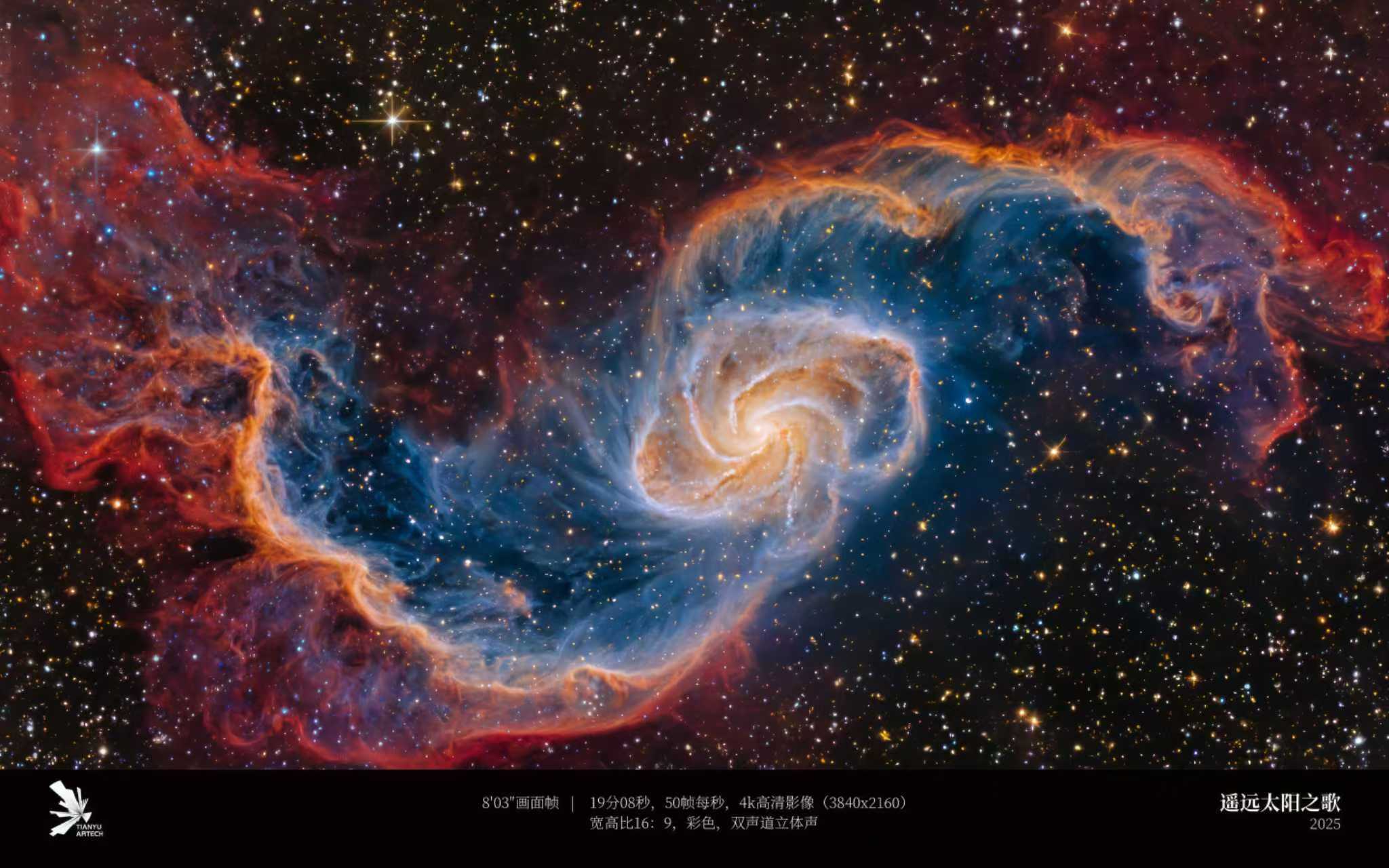
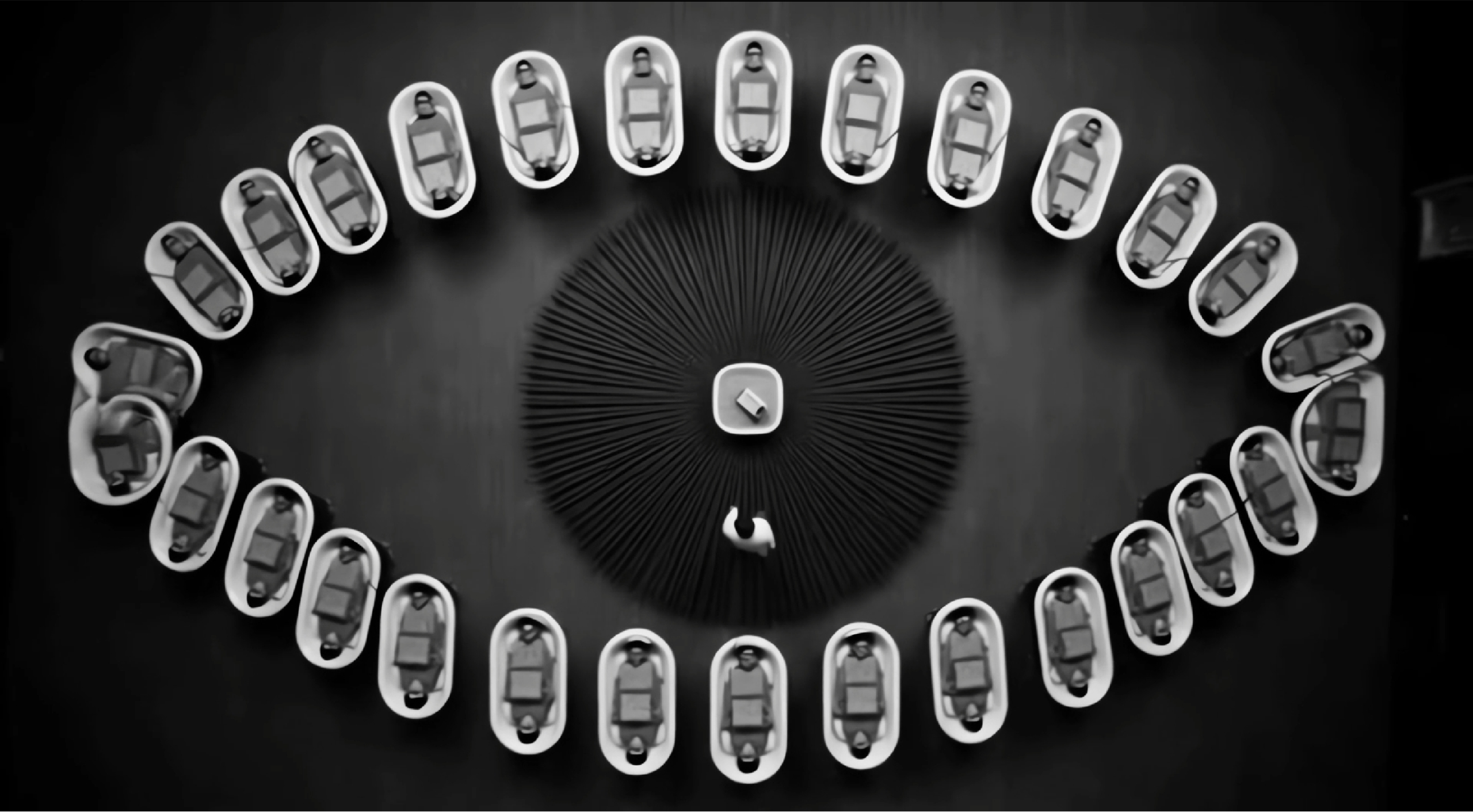
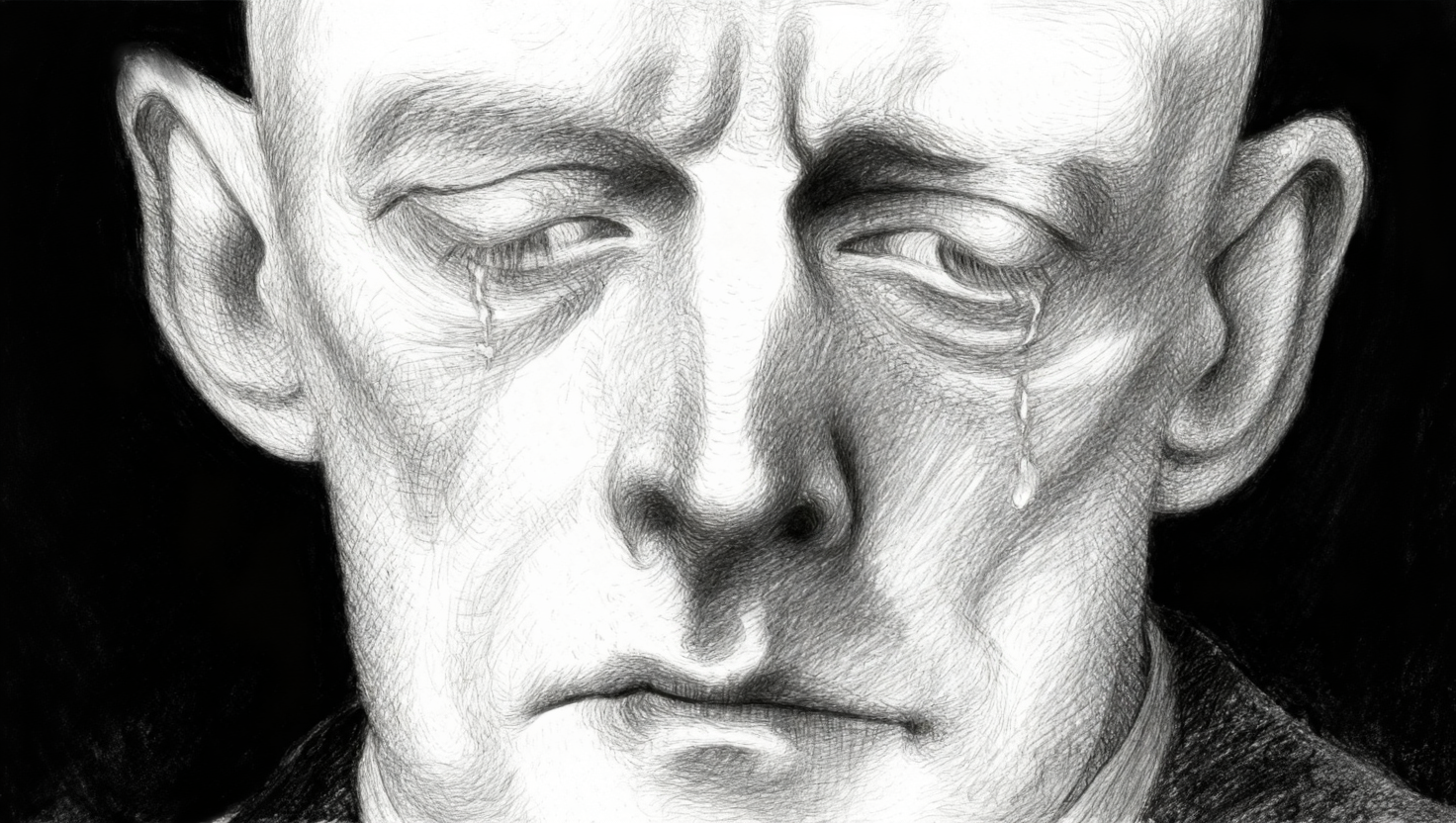
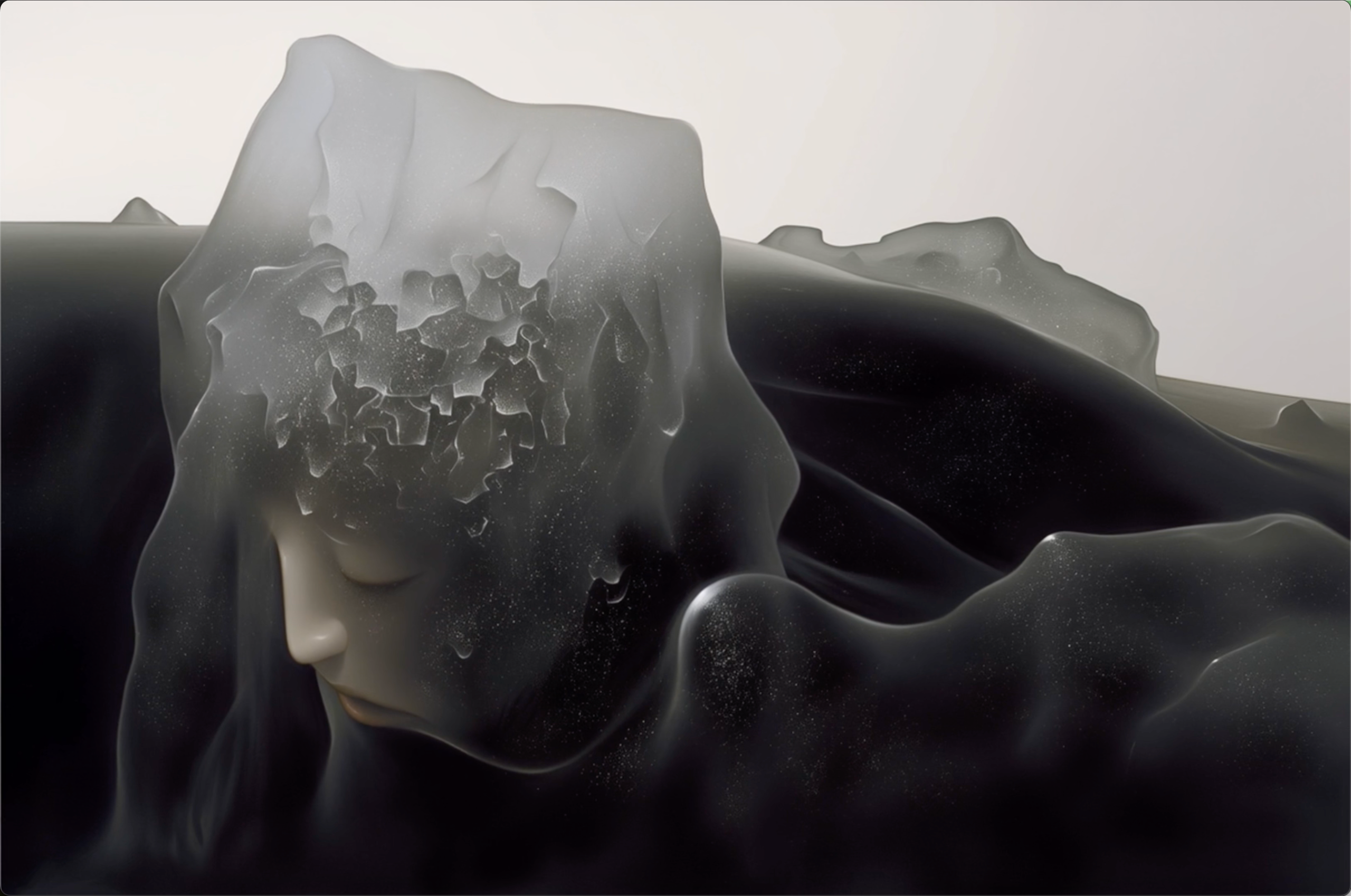
Geothermal Language and Song of the Distant Sun use AI to transform processes of energy, geology, and material evolution that are difficult for humans to perceive directly into moving-image language. Feast and Self-Trained Animal focus on mechanisms of discipline within socialization. When emotion is absorbed into systems, what kinds of social effects emerge from the emotional economy and the illusion of value alignment? S.A.C.R.E.D. Center and The Collaborative Stage address precisely these affective structures of the algorithmic age. The Crying Man And His Elusive Shadow constructs a cyclical narrative of endless pursuit, reflecting the loops and self-exhaustion into which life so easily falls.

Related Projects
Thanks
Organizer: Shenzhen Municipal People’s Government
Co-organizers: Shenzhen Municipal Planning and Natural Resources Bureau; Shenzhen Nanshan District People’s Government; Shenzhen Futian District People’s Government; Development Administration of the Shenzhen Park of the Hetao Shenzhen-Hong Kong Science and Technology Innovation Cooperation Zone
Supporting Organizations: Shenzhen Bi-City Biennale Public Art Foundation; Urban Planning & Design Institute of Shenzhen
Co-curating Institution: Shanghai Fengyuzhu Culture Technology Co., Ltd.